The short answer
A contained mold remediation typically runs assessment, containment setup, removal, cleaning, drying and verification. Small scopes can complete removal in a day with drying continuing for several more; larger or concealed scopes extend at the removal and drying stages. Reconstruction is a separate phase that follows verification.
Assessment and scope, before anything is removed
The first visit establishes where the water came from, how far it went, what is affected and what completion will mean. Without that, quantities are guesses and change orders follow.
Expect this to take a visit and some investigation instead of a walk-through. Selective openings at this stage save money later.
Setup and removal
Containment goes up before disturbance begins. Removal is then usually the most visible and fastest-feeling part of the job, and on a modest scope it can be a single day.
Larger or concealed scopes stretch here, because every opening can reveal more than the estimate assumed.
Start the restoration request
Need restoration service for this property?
Send the address, callback number and a short description of the damage. You do not need to diagnose the problem before requesting help.
Drying and verification
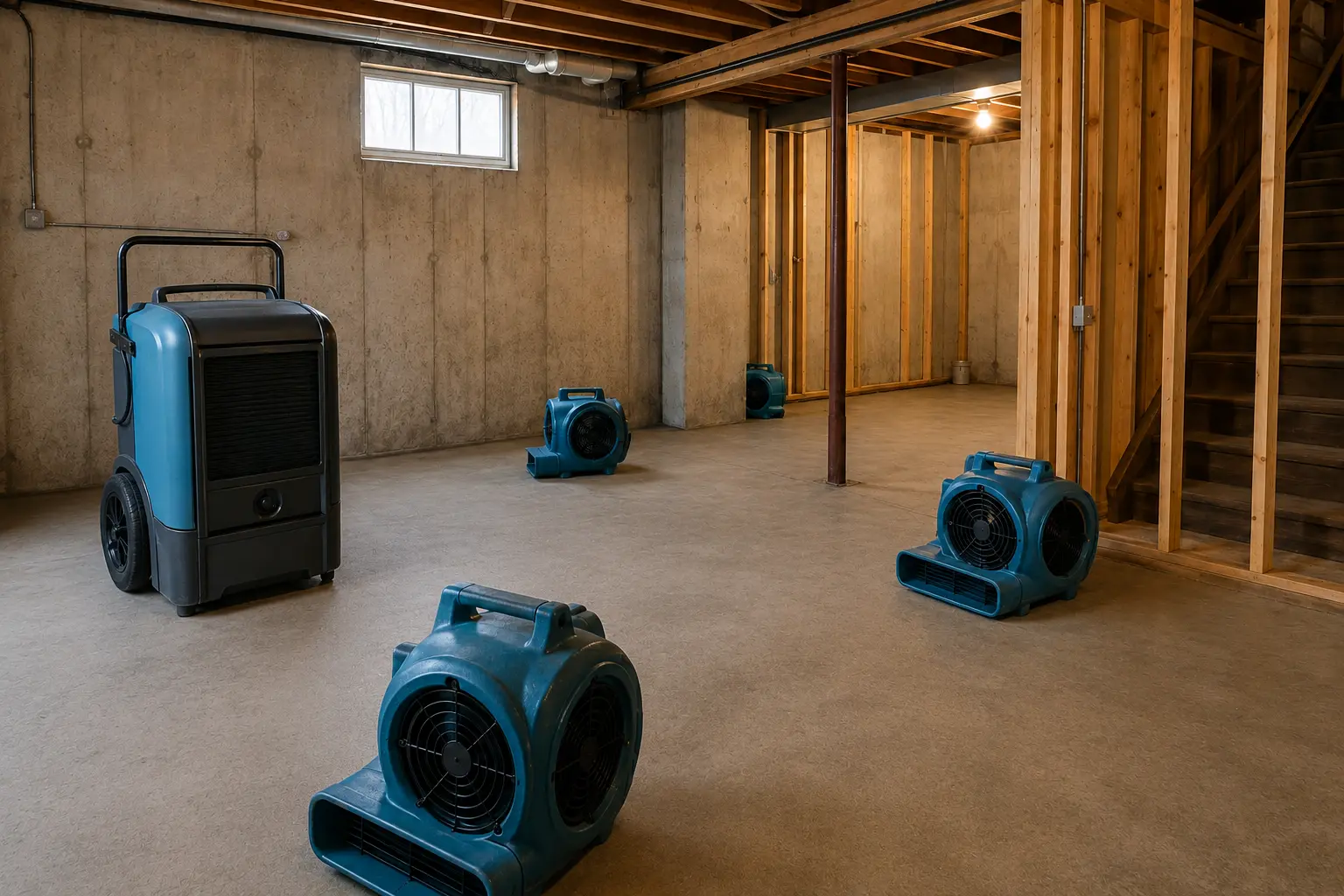
Drying continues after removal is finished and is governed by readings, not by a schedule. Materials with mass and low permeability take longer.
Verification then confirms the defined standard was met. Agree who verifies and against what criteria before work starts.
What usually causes delay
Almost every schedule slip traces to one of a short list, and most are foreseeable at the scoping stage.
- The moisture source was not actually corrected
- Lead or asbestos requirements discovered mid-job
- Waiting on an insurer decision before continuing
- Occupied-building access and working hours
- Reconstruction estimate not started until remediation ended
Living in the building during work
Occupied remediation is normal and it slows things down. Containment has to be maintained around real life, work hours are usually shorter and setup and breakdown are repeated.
Agree access windows, which rooms are usable and how the route in and out is protected before day one.
Getting the rebuild started sooner
The single most effective schedule improvement is to have the reconstruction estimate produced while drying is still running, instead of after verification.
Ask for that explicitly. It costs the contractor nothing and can remove weeks of dead time from the middle of a project.
Greater Burlington scheduling realities
Regional demand spikes after a hard freeze in midwinter and after heavy spring rain, and those are the periods when equipment and crews are most committed. A project that would start in two days in September can wait longer in January.
In a pre-1978 Burlington-area building, an unexpected lead or asbestos finding is the most common single cause of a mid-project pause, so raising it during scoping rather than during demolition is worth the conversation.
A remediation timeline by phase
Phases run in order, and the length of each depends on the scope.
| Phase | What happens | What lengthens it |
|---|---|---|
| Assessment and scope | Source and extent determined | Concealed or widespread growth |
| Containment setup | Barriers and air control installed | Large or multiple areas |
| Removal | Affected material taken out | Volume of material |
| Cleaning and drying | Surfaces cleaned, area dried | Slow-drying materials |
| Verification | Confirm the standard is met | Failed verification |
Step by step
How a mold remediation project runs
The normal sequence of a contained mold remediation, from first assessment through verification and handoff to reconstruction.
Assess and scope
Identify the moisture source, map the affected area with meters and selective openings, and produce a written scope with a containment boundary and a completion standard.Correct the moisture source
Stop the water. Remediation carried out while the source is active will not hold, so plumbing, roofing or drainage repair is sequenced first or alongside.Set containment
Install barriers and manage airflow so debris stays within the work area, protecting the rest of the building and any occupants who remain.Remove and clean
Remove affected porous materials to the scoped boundary, clean surfaces that are being retained, and bag and remove debris through the planned route.Dry to the goal
Run drying equipment and take daily readings until the retained materials reach the documented drying goal set against a dry reference area.Verify completion
Confirm the source is corrected, the scoped work is done, the area is clean and readings meet the goal. On larger or disputed projects an independent assessor performs this.Hand off to reconstruction
Only once verification passes does rebuild begin. This is a separate scope, often a separate contract, and typically the longest phase.
Clear answers
Common questions
Can I stay in the house during remediation?
Often yes, with containment maintained and agreed access windows. It typically extends the schedule.
Why is drying still running after removal finished?
Retained materials must reach a documented drying goal measured against a dry reference. That is governed by readings instead of by a set number of days.
Can remediation be done in a day?
A small contained area sometimes. Anything involving significant removal, containment and verification runs longer, and the verification step is not one to compress.
Authoritative references