The short answer
Water damage restoration removes standing water, locates moisture inside floors, walls and ceilings, dries the structure to a documented goal and prepares the property for repair. The work is driven by the water category, the materials affected and how long they stayed wet, not by the size of the visible puddle.
Water extraction and damage inspection
The first visit establishes the source, rooms affected, water type and how far moisture traveled. Standing water is extracted, damaged materials are identified and moisture readings guide the drying plan.
What professional mitigation can include
The response normally begins with an inspection and moisture survey. The provider determines what can be dried in place, what must be removed, and how airflow, dehumidification and temperature will be controlled.
- Standing-water extraction
- Removal of unsalvageable or contaminated materials
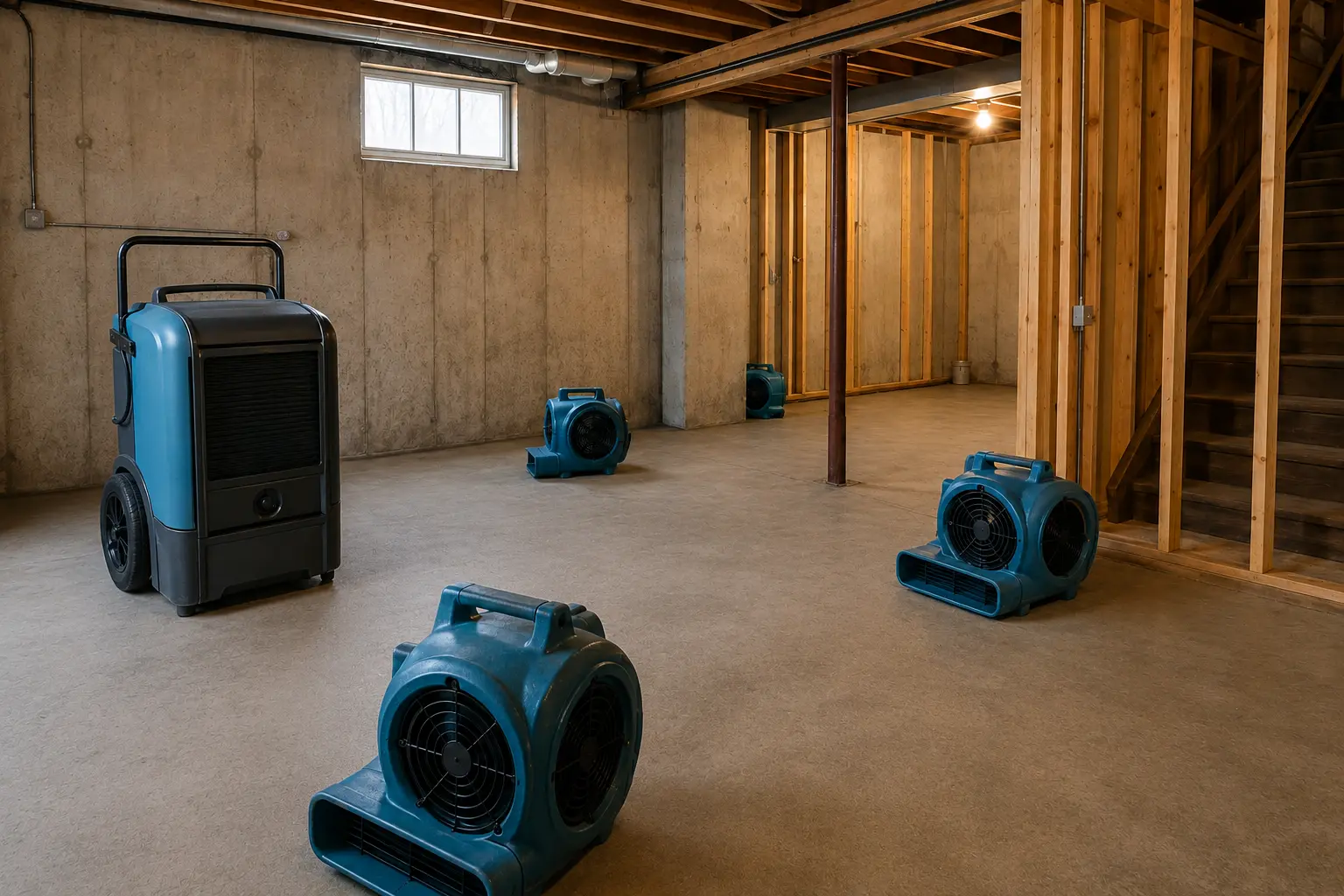
- Air movement and dehumidification
- Cleaning and odor control appropriate to the loss
- Repeat monitoring and documentation
- A separate repair or reconstruction scope
Start the restoration request
Need restoration service for this property?
Send the address, callback number and a short description of the damage. You do not need to diagnose the problem before requesting help.
What affects cost and drying time
The source and contamination level matter more than the visible puddle alone. Cost is also affected by the length of time materials stayed wet, square footage, number of rooms and levels, flooring and wall assemblies, access, contents, demolition, environmental materials and whether reconstruction is included. A responsible provider should inspect before promising a fixed total or completion date.
How the affected area is established
Water often moves under flooring, behind baseboard, through cabinets and into a ceiling below. A proper inspection starts at the source, follows the likely water path and compares material readings with unaffected areas.
Thermal imaging can help identify temperature patterns, but it does not replace direct moisture readings or physical inspection. The removal and drying plan should be tied to confirmed conditions.
What a complete water-damage record should show
Useful documentation identifies the source, water type, rooms affected, initial conditions, materials removed, equipment installed, monitoring results and the basis for completion. Photos should be labeled by room and date.
That record helps the owner understand the work and gives the repair contractor a clear starting point. Insurance coverage remains a decision for the insurer, not the restoration company.
What actually drives the cost
The single biggest cost variable is the gap between when the water started and when drying began, because that determines how much material can be dried in place instead of removed. A loss found in an hour and a loss found on return from a week away are different jobs at the same volume of water.
After that it is the assemblies involved. Water that stayed on a tile floor is a fraction of the same water that reached carpet pad, ran under a cabinet run and dropped into the ceiling below.
- Time to discovery, and time to the start of drying
- Whether water reached a cavity, a cabinet base or the level below
- Flooring type: tile against carpet, hardwood, laminate or LVP
- Whether insulation in an affected wall has to be removed
- Number of drying days the readings actually support
- Whether contents had to be moved, protected or packed out
What is included, and what is a separate scope
Water-damage restoration covers extraction, moisture mapping, controlled removal, structural drying with daily readings, cleaning appropriate to the water category and the documentation that supports all of it.
It does not cover the plumbing or roofing repair that stopped the water, and it does not cover putting the building back. Those are the source repair and the reconstruction scope, and both should be identified on day one so the schedule is not discovered later.
Water damage in older Greater Burlington homes
Plaster over wood lath behaves differently from drywall: it holds more water, releases it slowly, and sound plaster can frequently be dried and saved where drywall would be removed. That is better for the building and longer on the schedule.
Balloon framing is the other regional factor. In many pre-war Burlington and Winooski houses the stud cavities run continuously from sill to roof, so water entering upstairs can appear two floors down with nothing visibly wet in between. The affected area has to be established by following the cavity, not by looking at the stain.
Water damage across the Greater Burlington building stock
The same volume of water produces very different jobs across this region. In Burlington's Old North End or Winooski's older multifamily stock it lands in plaster, board sheathing and layered flooring, all of which hold water longer and give less visible warning than modern assemblies. In a Williston or South Burlington subdivision house it lands in drywall over studs and a finished basement, which dries predictably but still soaks everything at the lowest level.
Where the water came from matters as much as where it went. A burst supply line in January, melt water through a Hinesburg foundation in April and a Winooski River event in a Richmond valley property are three different losses with three different insurance answers, and a property here can see more than one in a single year.
Dry in place, or remove: how the call is made
No single factor decides whether a material is dried or removed. These are the ones that move the decision, and a written scope should say which of them applied to your building.
| Factor | Toward drying in place | Toward removal |
|---|---|---|
| Water category | Sanitary supply water | Contaminated or sewage |
| Exposure time | Hours | Days or unknown |
| Material porosity | Low, tile, sealed surfaces | High, carpet pad, insulation |
| Access | Open and reachable | Closed cavity or under cabinets |
| Verification | Readings can confirm progress | Cannot be measured in place |
| Structural condition | Sound | Delaminated, swollen or decayed |
Step by step
How a water damage restoration project runs
The sequence from the first call to the point repairs can start, and what decides each stage.
Stop the source and make the area safe
Water is stopped at the fixture or the main, and electrical risk is assessed before anyone works in a wet area. Nothing else in this list is worth doing while water is still arriving.Inspect and map the moisture
Meters and, where useful, thermal imaging establish how far the water actually travelled: under flooring, into wall cavities, along the floor structure. The wet area is nearly always larger than the visible one.Classify the water and set the scope
The water category decides what can be dried and kept versus what has to be removed, and the class of loss decides how much drying capacity the space needs. Both are recorded in the written scope.Extract standing and absorbed water
Surface water is removed first, then water held in carpet, pad and porous assemblies. Extraction removes far more water per hour than evaporation does, so it is done thoroughly before equipment is placed.Remove what cannot be dried
Padding, soaked insulation, swollen particleboard and any porous material that contacted contaminated water come out. Removal heights and boundaries come from meter readings, not from where the stain stops.Place drying equipment and control the environment
Air movers, dehumidifiers and containment are set to the affected volume and materials. Larger loads may need temporary power arranged rather than assumed.Monitor and document until the readings meet target
Affected materials are re-read on each visit and the numbers recorded. Drying is finished when the readings reach the documented target, not when a set number of days has passed.Hand off to repairs
Reconstruction starts after drying is verified. Closing up an assembly that is still wet is the single most expensive shortcut available in this work.
Clear answers
Common questions
How quickly should water damage be addressed?
As soon as it is safe. Earlier source control, extraction and drying can reduce the spread of damage. Vermont health guidance recommends drying wet materials quickly and thoroughly.
Can drywall be dried after a leak?
Sometimes. The answer depends on water type, saturation, insulation, coatings, duration and whether moisture can be measured and controlled. Contaminated or deteriorated materials may require removal.
How do I know the walls are actually dry?
By readings taken in the material and compared against an unaffected reference area of the same material, not by touch and not by how the surface looks. Ask for those readings in writing before anything is closed up.
Does all the wet drywall have to come out?
No. Sanitary water, brief exposure and good access frequently allow drywall to be dried in place. Contaminated water, long exposure and concealed cavities push toward removal. The scope should say which applied.
Why is equipment running for several days?
Materials release moisture slowly, and the equipment stays until readings reach the documented goal. Daily monitoring visits are what support the number of days billed.
Can I turn the equipment off at night?
It extends the project. The equipment is sized to run continuously; interrupting it means more days, not fewer.
What if more damage is found once walls are open?
That is common and is handled as a change to the scope, ideally photographed and reported as it is discovered instead of accumulated for one submission at the end.
Should I run a household dehumidifier instead?
A domestic unit does not have the capacity to dry a building assembly and provides no readings. It can help a small damp area; it does not substitute for structural drying after a real loss.
Authoritative references