The short answer
An inspection is needed for a defensible estimate.
What the restoration estimate can include
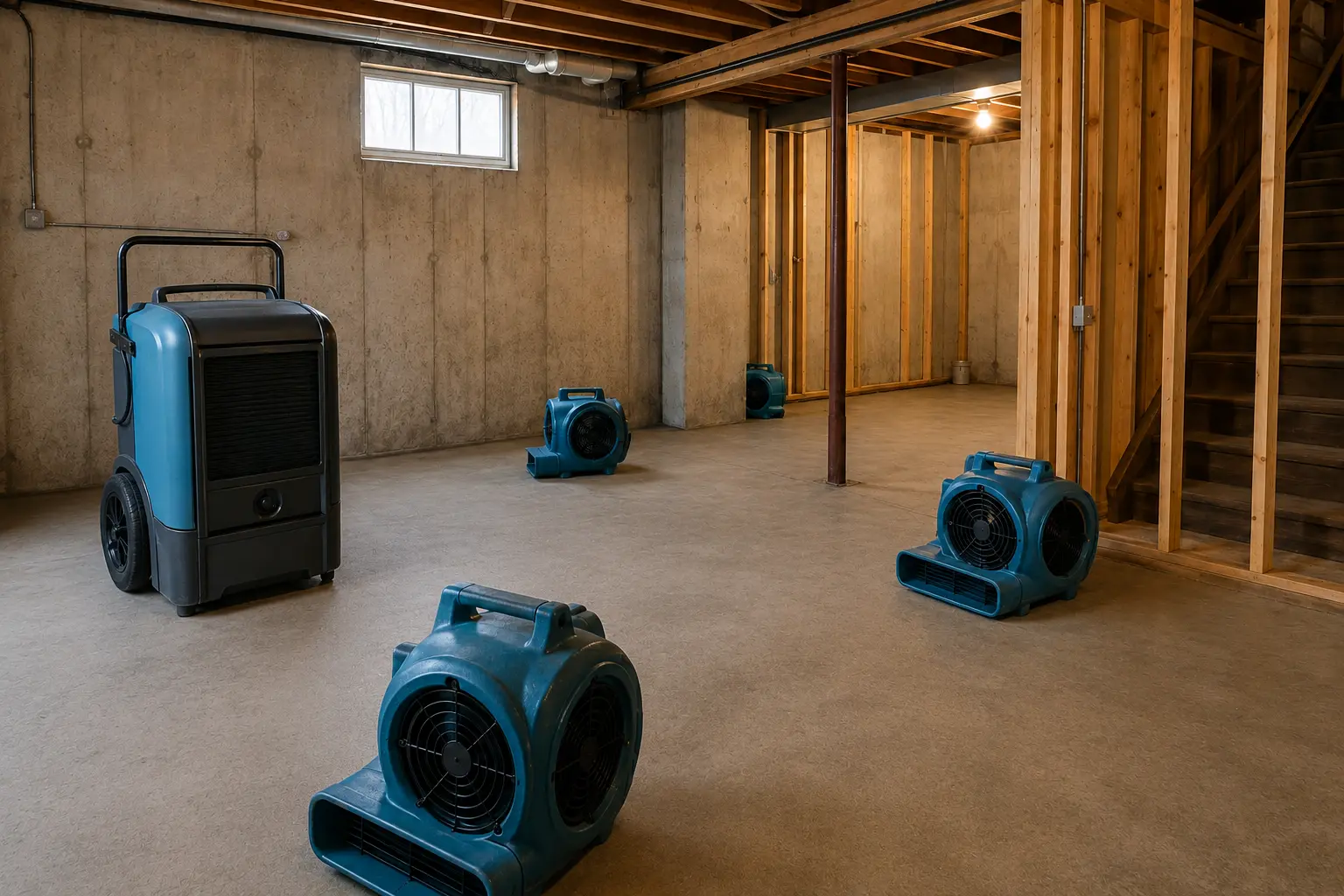
A water mitigation estimate may include the initial visit, extraction, moisture readings, equipment setup, daily monitoring, moving contents, removing unsalvageable materials, cleaning and final documentation. Reconstruction is often a separate estimate.
- Emergency service and extraction
- Air movers and dehumidifiers
- Monitoring visits and moisture documentation
- Drywall, insulation or flooring removal
- Cleaning and odor control
- Contents handling
- Repairs and finish work
Why two similar-looking losses can cost very different amounts
A small clean-water spill on sealed flooring is different from water that ran overnight through cabinets, hardwood, subflooring and a finished basement ceiling. Sewage, outside floodwater, asbestos or lead concerns, difficult access and commercial equipment needs can increase the work.
Start the restoration request
Need restoration service for this property?
Send the address, callback number and a short description of the damage. You do not need to diagnose the problem before requesting help.
The estimate follows the affected assembly
A surface spill on a hard floor may require limited extraction and drying. Water that reaches hardwood, cabinets, insulation, wall cavities and a ceiling below creates more measurement, access, equipment and repair work. The same visible puddle can produce very different scopes.
Request room dimensions, material quantities and the assumed water source in the estimate. These details make the price explainable and allow a meaningful comparison.
Separate mitigation from the rebuild
Emergency service, extraction, equipment, monitoring, demolition, cleaning and debris handling normally belong to mitigation. New drywall, flooring, cabinets, trim and paint belong to reconstruction. Contents handling and environmental work may be additional phases.
When a provider offers a single total, ask for those divisions anyway. They clarify authorization, scheduling and insurance documentation.
Control cost through written decisions
Ask how long equipment is expected to remain, what readings determine removal, which materials are candidates for drying in place and how hidden damage will be approved. Require written change documentation before non-emergency additions proceed.
The lowest total is not automatically the lowest final cost if it omits monitoring, cleaning, contents or repair. The highest total is not justified without quantities and a building-specific reason.
What changes restoration cost around Burlington
Local cost is driven by affected area, water source, materials, access, equipment duration, contents and reconstruction, not by the town name alone. Winter road access, after-hours building access and a remote or multi-level property can change labor without justifying an unexplained geographic surcharge.
Older finishes, lead or asbestos controls and matching plaster or woodwork can affect repair cost after mitigation. Estimates should separate those conditions from extraction and drying so the customer can understand each phase.
What moves a restoration estimate
No single number applies to a water loss, because the same square footage can involve clean supply water or sewage, a few hours or several days, a sealed tile floor or wet carpet over a wood subfloor, and a mitigation-only scope or a full rebuild, so these are the factors that move an estimate and the direction each one usually pushes it.
| Driver | Pushes cost up when | Pushes cost down when |
|---|---|---|
| Water source and category | Contaminated or sewage | Clean supply water caught early |
| Area and levels affected | More rooms, floors and wall cavities | A contained area |
| Materials | Porous materials that must be removed | Sealed, non-porous materials that dry in place |
| Duration | Standing longer before drying starts | Fast response |
| Scope | Includes demolition, contents and rebuild | Mitigation only, rebuild priced separately |
Clear answers
Common questions
Does insurance pay for water restoration?
It depends on the policy and cause. The restoration company documents the loss and work; the insurer determines coverage.
Is water extraction billed separately from drying?
Often yes. Extraction, equipment, monitoring, demolition, cleaning, contents and repairs may appear as separate parts of the estimate.
Can anyone quote a price over the phone?
Not honestly. Nobody can see how much material is wet, how contaminated the water is or how long it sat without inspecting. A phone figure is a guess that will change.
Does the deductible apply to mitigation?
Deductibles apply to the claim rather than to a stage of the work, so how it lands across mitigation and reconstruction depends on the policy. Your insurer answers this one.
Is mitigation billed separately from repairs?
Usually yes. Mitigation, extraction, drying, removal, and reconstruction are commonly separate scopes and sometimes separate contractors. Ask which you are being quoted for.
Authoritative references