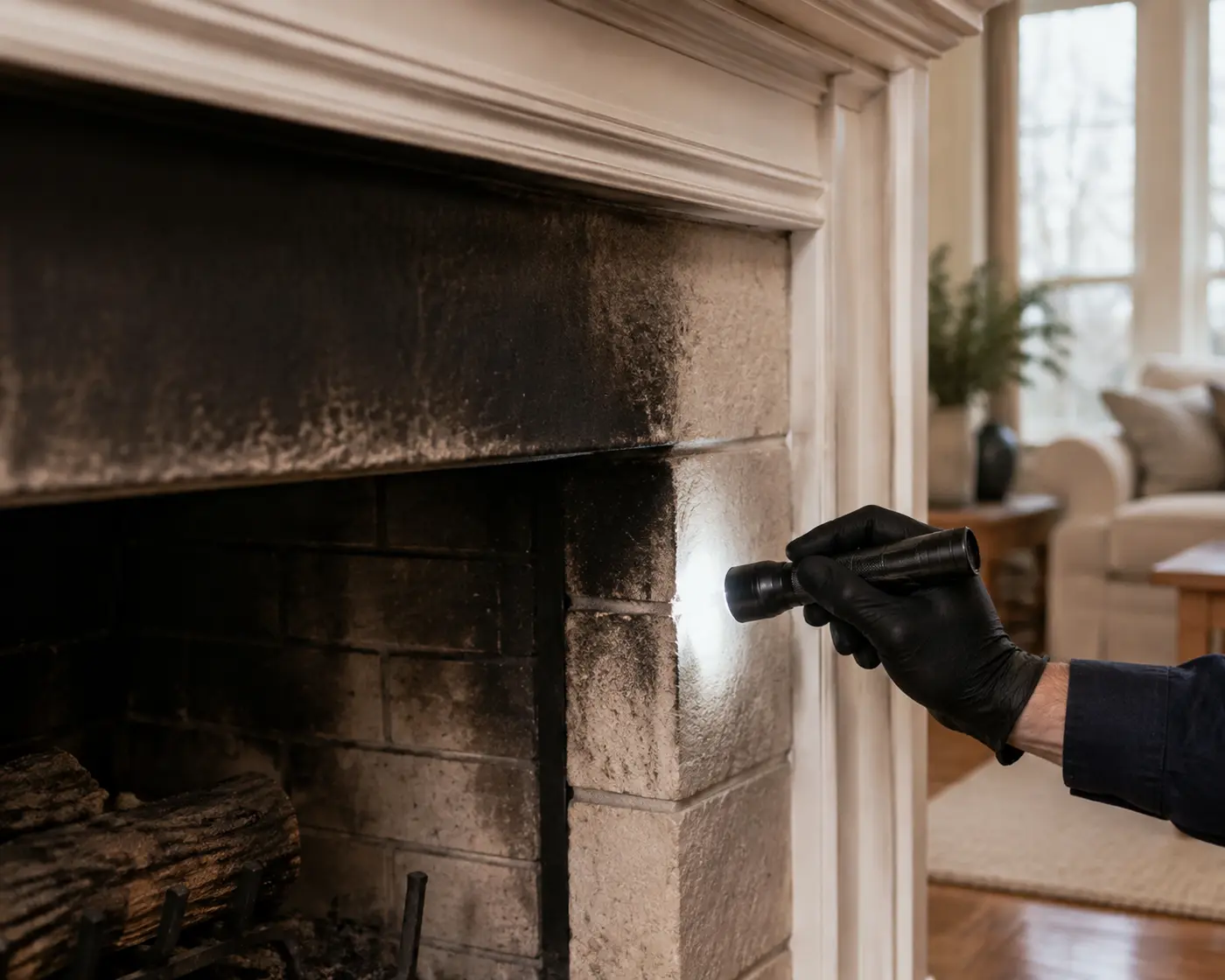
The short answer
Cleaning surfaces alone does not resolve odour held in porous materials and the building's air path, which is why it returns when heating comes back on.
Soot cleanup requires the right method
Residues vary based on what burned and the temperature of the fire. Dry particles, oily residue and protein-based smoke can react differently to cleaning. Using the wrong product or wiping method can spread staining and odor.
Smoke odor removal
Deodorization begins after residue and unsalvageable materials are addressed. Depending on the loss, work may include surface cleaning, contents treatment, air cleaning, sealing of persistent surfaces and specialized odor-control equipment.
Start the restoration request
Need restoration service for this property?
Send the address, callback number and a short description of the damage. You do not need to diagnose the problem before requesting help.
Rooms that look unaffected may still need inspection
Air movement can carry smoke into closets, wall cavities and distant rooms. An inspection should establish where residue is present before broad cleaning or reconstruction begins.
Establish the cleaning boundary before deodorizing
The provider should inspect residue and odor throughout the affected zone before choosing cleaning and air-treatment methods.
A fragrance or fogging treatment alone does not remove soot or contaminated porous material.
Building and contents must be handled together
Textiles, upholstered furniture, unfinished wood, electronics and paper can hold smoke differently from painted walls and hard surfaces. Item-specific contents work may continue after structural cleaning begins.
The project should prevent untreated contents from reintroducing odor into cleaned rooms.
What actually drives the cost
Odour and residue work is priced by the surface area reached and by residue type, not by the size of the fire. A small contained fire that ran a plastic-heavy load can distribute residue further and more stubbornly than a larger fire that burned clean wood.
- Residue type, which follows what burned
- Whether HVAC distributed residue through the building
- Porous materials holding odour: textiles, insulation, wood
- Whether sealing of affected substrates is required
- Contents volume needing individual cleaning
What is included, and what is a separate scope
HVAC cleaning is frequently a separate specialist scope, and sealing or refinishing substrates sits with reconstruction. Any claim that a single treatment permanently removes all odour without addressing porous materials is worth questioning.
Odour movement in the region's older buildings
Balloon-framed walls and open chases in pre-war Greater Burlington housing give smoke and odour a path between floors and into rooms that never saw fire. In converted multi-unit buildings that path can cross into a neighbour's space entirely.
Vermont's long heating season compounds it: a building closed up for months recirculates its own air, so odour that seems resolved in April can reassert itself when the heating comes back on. That is a reason to address porous materials properly instead of rely on masking.
Smoke odour sources common in this region
Wood heat is widespread across this region, and it produces its own set of residues: wood smoke through a room, a chimney fire, and a woodstove that backdrafts. Oil-fired heating adds furnace puffbacks, where unburned fuel ignites and forces oily soot through the whole distribution system.
Each residue type needs a different cleaning approach and using the wrong one drives it permanently into surfaces. Tell the restoration company what burned and what the building is heated with. It is the fastest route to the right method.
Soot and smoke odor work compared
Cleaning comes before deodorizing. The table keeps the order.
| Task | Purpose | Order |
|---|---|---|
| Define the boundary | Find where residue reached | First |
| Clean soot by method | Match cleaning to residue | Second |
| Treat contents | Building and contents together | Alongside |
| Deodorize | Neutralize what remains | After cleaning |
Step by step
How smoke odour and soot are actually removed
Odour work is source removal. Anything applied before that is a temporary mask.
Identify the residue and the fuel
Dry soot, oily puffback residue, protein residue from a smouldering cooking fire and wood smoke behave differently. Wetting or wiping the wrong one makes it permanent.Contain and filter
The affected area is contained and air is filtered through the work so cleaning does not redistribute residue into unaffected rooms.Clean surfaces to the residue type
Dry methods for dry soot, solvent methods for oily residue, and the correct sequence on each surface so it lifts rather than smears.Address the HVAC system
Any system that ran during or after the fire has moved residue through everything it serves, and an untouched system re-contaminates everything cleaned.Handle contents separately
Textiles, papers and hard contents are assessed and cleaned by method. A domestic wash sets smoke odour into fabric rather than removing it.Seal what cannot be fully cleaned, then finish
Where residue remains in a porous substrate, sealing before repainting stops the odour and staining coming back through the new paint.
Clear answers
Common questions
Will smoke smell go away on its own?
Persistent odor usually means residue remains on materials or contents. Masking fragrance does not remove the source.
Can I clean soot with household cleaner?
Some cleaners can set or smear soot. A fire-restoration professional should identify the residue and test a cleaning method first.
Why does the smell come back?
Usually because porous materials holding residue were cleaned on the surface instead of addressed, and because a building recirculates its own air through a long heating season.
Do walls need sealing?
Sometimes, where residue has penetrated a substrate that cannot be fully cleaned. That is a reconstruction step and should be identified in the scope instead of assumed.
The fire was small. Why is the cleaning area so large?
Smoke travels far beyond flame, and in older buildings with open framing cavities and shared chases it reaches rooms and sometimes units that never saw fire.