The short answer
During a Vermont thaw, melting snow, rain and partly frozen ground can send water toward foundations faster than drainage or sump systems can move it. Restoration addresses the wet building now; a source investigation prevents the next event.
Identify how water entered
Water may rise through a floor joint or drain, cross a bulkhead, enter through a foundation crack, overflow a sump, leak from plumbing or follow runoff toward the building. Similar-looking basement water can require different source repairs.
Record the water depth, entry points, sump operation, recent weather and whether the level is rising. Finished walls and floating floors may conceal a larger affected area than the exposed water line suggests.
Treat outside water as potentially contaminated
Snowmelt and groundwater can carry soil, microorganisms, road residue or other contaminants. The cleanup plan should reflect the source, exposure time and affected porous materials rather than assuming clear-looking water is clean.
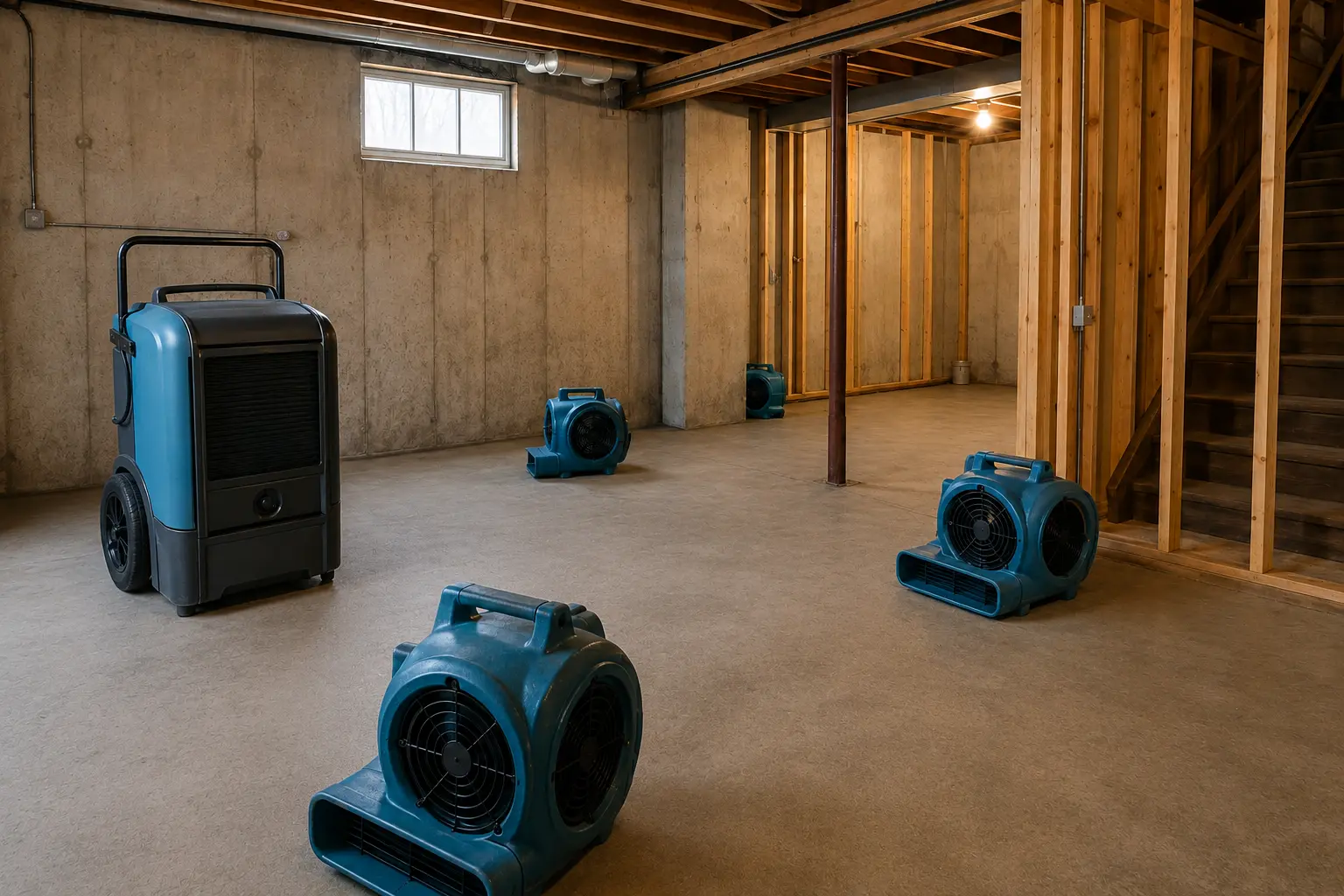
Extraction, controlled removal, cleaning and structural drying are planned together. Mechanical equipment, stored chemicals and electrical systems may require specialized trades within the overall project.
Start the restoration request
Need restoration service for this property?
Send the address, callback number and a short description of the damage. You do not need to diagnose the problem before requesting help.
Correct the recurring condition after drying
Review grading, gutters, downspout discharge, foundation openings, perimeter drainage, sump capacity, backup power and pump discharge. The right correction depends on the actual path, not a generic basement product.
Keep photos and dates across several thaw or rain events. That history helps a drainage, foundation or plumbing professional distinguish an intermittent source from a one-time failure.
Why thaw conditions overwhelm a basement
Snow stores water near the property until temperatures rise. Rain and rapid warming can release that water while frozen soil, blocked surface drainage or snow piles restrict where it can go.
A sump system may fail because of power, pump, float, discharge or capacity problems. A working pump can still be outpaced, which is different from a mechanical failure and calls for a different prevention plan.
Map the finished area before removal
Check wall bases, insulation, flooring seams, closets, stair landings and the underside of stored contents. Water can move under floating flooring or behind finished perimeter walls beyond the visible wet edge.
The removal boundary should consider contamination, deterioration and drying access. A narrow water line does not automatically justify either full demolition or leaving the assembly closed.
Build a property-specific recurrence plan
After cleanup, observe roof runoff, grading, window wells, bulkheads, foundation joints, perimeter drains, sump inflow and discharge. Prioritize the entry route supported by evidence from the event.
Backup power, pump alarms and monitored water sensors can reduce discovery time, but they do not replace drainage capacity or source correction. Document ownership and testing of each preventive component.
Spring thaw across the Greater Burlington area
Thaw timing can vary between lake-influenced Burlington, open rural properties and higher-elevation towns such as Underhill or Jeffersonville. Snow piles, roof runoff, shaded frozen soil and pump discharge can create different water paths even during the same weather event.
Document conditions at the property rather than relying on a regional forecast alone. Photos of the foundation, slope, discharge and interior entry points during the event can guide both restoration and the later drainage correction.
How thaw water gets in
Knowing the entry path decides both the cleanup and the prevention. The table lists common paths and what they imply.
| Entry path | What it suggests | What to correct afterward |
|---|---|---|
| Rising at a floor joint or drain | High water table or overwhelmed drainage | Drainage and sump capacity |
| Through a foundation crack | Wall or footing pathway | Crack repair and exterior water control |
| Over a bulkhead or window well | Surface water reaching openings | Grading, covers and wells |
| Sump overflow | Inflow exceeded pump capacity | Pump capacity, backup and discharge |
Clear answers
Common questions
Can snowmelt water be pumped directly outside?
Discharge must not immediately return to the foundation or violate local requirements. The restoration and drainage plan should account for the property and conditions.
Will drying the basement prevent it from flooding again?
No. Drying restores the current damage; recurrence requires correction of the drainage, sump, foundation, plumbing or grading source.
Is snowmelt flooding covered by homeowners insurance?
Water rising from outside is typically excluded from standard policies and covered under flood insurance. Your insurer decides your claim, so ask them specifically about melt-driven water.
What should I do before the melt each year?
Clear gutters and extend downspout discharge well away from the foundation, check the grade slopes away from the building, test the sump pump, and move anything irreplaceable off the basement floor.
Why does it happen even without rain?
Frozen ground cannot absorb the melt, so the water runs across the surface instead of soaking in and finds the lowest opening in the building envelope.
Authoritative references