The short answer
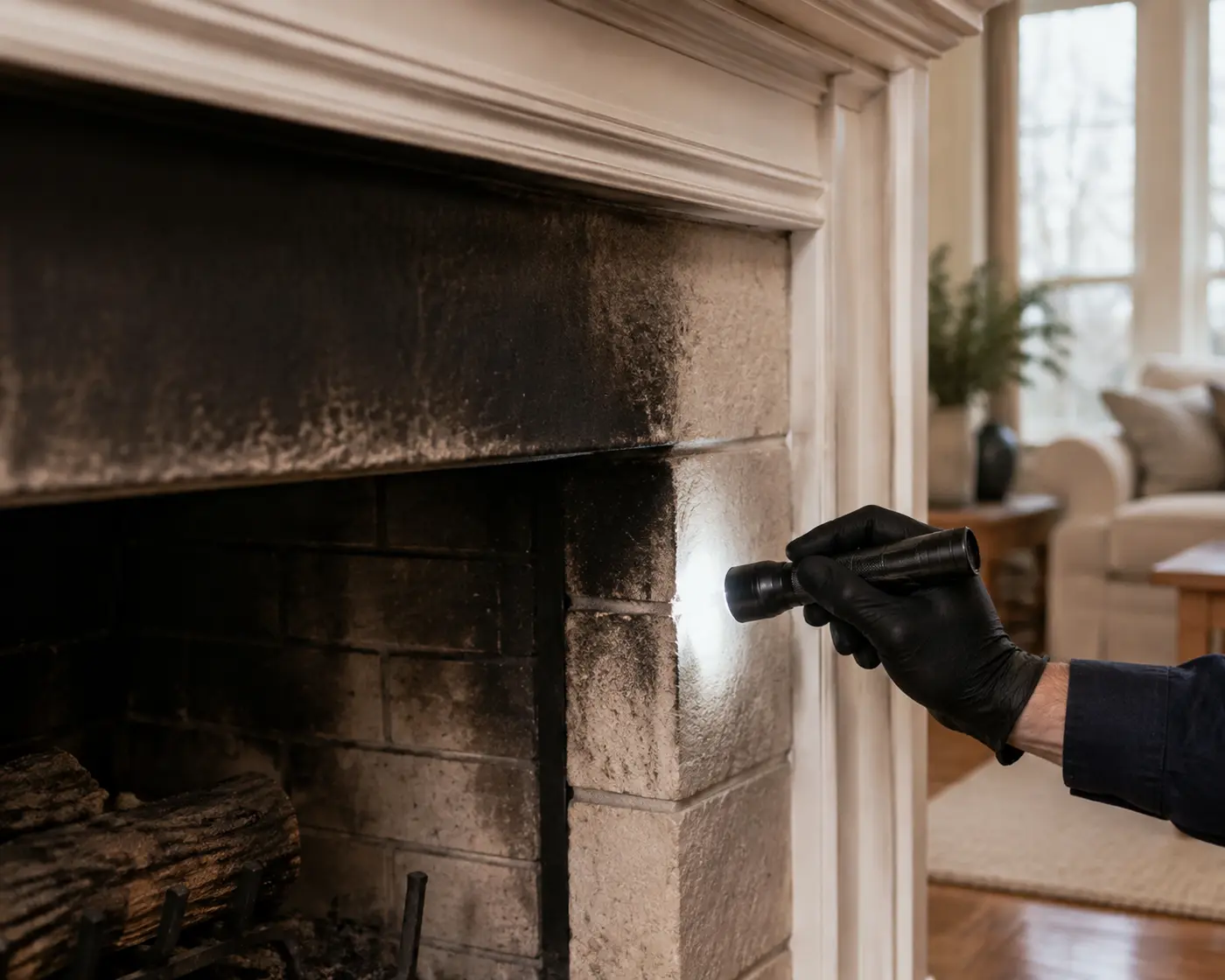
Smoke often affects rooms and systems beyond the visibly burned area.
Wait for official release
The fire department and responsible authorities control access first. Board-up or tarping should not interfere with investigation, utilities or structural safety.
Address firefighting water promptly
Suppression water can migrate far beyond the burned area. Extraction, material evaluation and drying may begin as a water-loss track within the larger fire project.
Start the restoration request
Need restoration service for this property?
Send the address, callback number and a short description of the damage. You do not need to diagnose the problem before requesting help.
Test before cleaning broadly
Residue and surface combinations behave differently. A fire-restoration specialist should test methods, prevent cross-contamination and document restorable versus nonrestorable contents.
Control the reconstruction handoff
Repairs should begin only after mitigation, environmental requirements and scope decisions are clear. Keep fire, water, contents and rebuild estimates distinguishable.
Stabilize the opening and remove water
Broken windows, doors or roof sections may need temporary protection after fire-department activity. Water should be extracted and wet assemblies inspected before they add secondary damage. Electrical, structural and utility decisions may require licensed trades.
The emergency scope should distinguish temporary board-up or covering from permanent construction. Photograph openings and temporary work before repairs conceal them.
Inspect residue by room and material
Smoke movement depends on heat, pressure and air pathways. Residue can enter cabinets, fabrics, wall voids and HVAC components outside the fire room. Different residues can smear, corrode or permanently stain if the wrong cleaning method is used.
The restoration company should test representative surfaces and document what will be cleaned, sealed, refinished or replaced. Electronics, art, textiles and specialty contents may need separate vendors.
Remove odor sources before deodorizing
Charred material, contaminated insulation, settled residue and affected contents continue to produce odor until addressed. Air cleaning, fogging, hydroxyl or other methods may support the project after physical cleaning; they should not be used to mask an incomplete scope.
Before reconstruction, confirm that demolition, cleaning, contents and odor decisions are complete for the affected area. Keep building and contents inventories aligned so items do not move back into an unfinished environment.
Fire restoration during a Vermont recovery
A Greater Burlington fire loss can include freezing-weather exposure, firefighting water and a damaged heating system in addition to soot. Temporary enclosure, water removal and heat planning may need to move together before interior cleaning begins.
Urban apartments, mixed-use buildings and rural homes create different access and contents challenges. The restoration scope should identify shared areas, neighboring units, utilities and cold-weather protection without assuming that visible flame damage defines the entire project.
Fire losses by phase
A fire loss moves through phases that each have different priorities and a different party in charge, from waiting for the fire department to release the building, through stabilization and residue testing, to cleaning and rebuilding, and the table shows who controls each phase and what it is meant to accomplish before the next one starts.
| Phase | Priority | Who controls it |
|---|---|---|
| Release | Wait for access to be permitted | Fire department and authorities |
| Stabilize | Board-up, tarping, firefighting-water removal | Restoration company, once released |
| Assess residue | Test by room and material before cleaning broadly | Restoration company |
| Clean and treat | Material-specific soot cleaning, contents, odor control | Restoration company |
| Rebuild | Replace what was removed | Reconstruction contractor, planned at the handoff |
Clear answers
Common questions
Why does a fire project often include water restoration?
Firefighting water and damaged plumbing or sprinklers can wet rooms beyond the burn area, creating a separate extraction, material and structural-drying scope.
Will deodorizer alone remove smoke odor?
No. Effective odor work follows residue identification, source removal and surface- and contents-specific cleaning. Fragrance does not demonstrate that smoke residue is gone.
Why is there damage in rooms that did not burn?
Smoke travels through the whole building and deposits residue on surfaces far from the fire, and HVAC systems distribute it further. Affected area is almost always much larger than burned area.
Can I stay in the house after a small fire?
That depends on residue, odour, structural condition and utilities, and it is an inspection decision rather than a judgement call from inside the building. Do not resume use of HVAC until it has been checked.
What happens to the water the fire service used?
It is treated as a water loss in its own right, with extraction and structural drying, and it frequently affects more of the building than the fire did.
Authoritative references