The short answer
A delayed frozen-pipe loss needs source repair, safe heat and power, reliable access, inspection of every lower level and a recurrence plan tied to the failed plumbing and building conditions, not only water extraction in the room where the break was found.
Make the building stable enough to dry
Heating, electrical or fuel-system professionals may also be needed before restoration equipment can operate safely. Report whether the water is off, heat is working, power is available and the building has visible ceiling or structural damage.
Do not assume a temporary heat source is suitable for unattended use. The responsible trade and property representative should define how heat and utilities will be restored and monitored.
Inspect the entire vertical water path
Water from an upper level can move through walls, stair openings, chases and floor assemblies into the basement. Frozen surfaces, ice and very cold materials can delay visible drainage and complicate early readings.
Create a floor-by-floor room list with photographs, material decisions and access constraints. Outbuildings, utility rooms and disconnected additions should be named separately so they are not missed in one general address.
Start the restoration request
Need restoration service for this property?
Send the address, callback number and a short description of the damage. You do not need to diagnose the problem before requesting help.
Build a recurrence plan around the real failure
After mitigation, identify the affected plumbing zone, heat setting, last known dry date, alarm history and any door, window or insulation condition. The correction may involve plumbing, heating, air sealing, insulation or monitoring, depending on the evidence.
For a seasonal or managed property, document who receives alerts, who can enter, where shutoffs are located and what happens during an extended outage. Those prevention decisions should remain distinct from the current restoration charges.
Establish the discovery timeline
Record the last date the building was known dry, alarm or utility events, outdoor conditions, heat setting, who entered and what was changed before photographs. This timeline helps interpret a loss that may have flowed and frozen in several cycles.
Avoid presenting the timeline as a coverage conclusion.
Plan unattended equipment operation
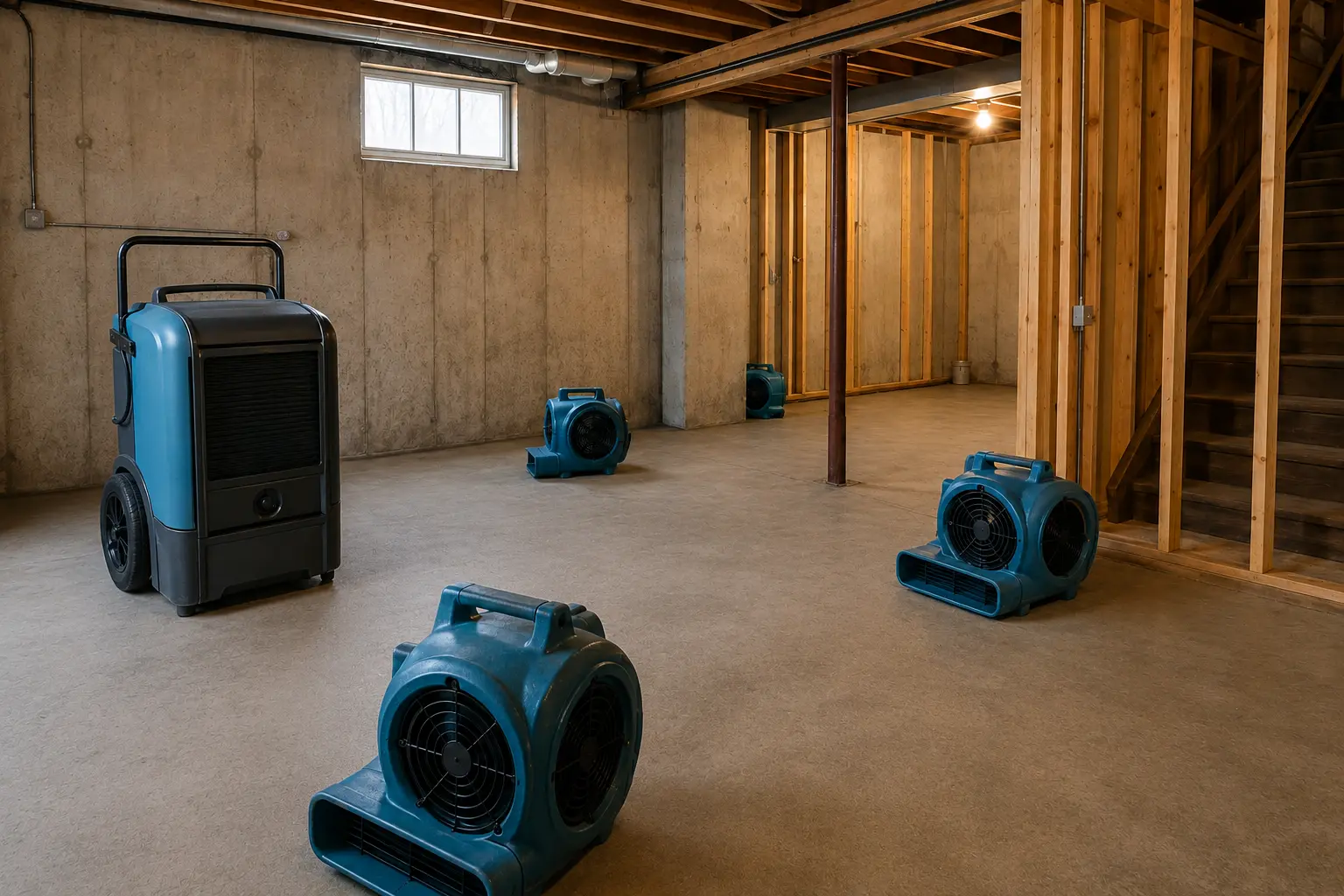
Confirm suitable electrical service, heat, drainage, security and a person who can respond to an alarm or equipment condition. A remote property needs an explicit check and access plan instead of an assumption that equipment can run without oversight.
If a generator, temporary heater or other system is required, name the qualified provider and operating controls. Restoration equipment should not be used to hide an unresolved utility problem.
Create a cold-weather completion file
Keep room-level photographs and readings, pipe and heating repairs, materials removed, equipment dates, access events and the prevention plan. Record detached or seasonal spaces separately.
For future absences, list shutoffs, monitoring, alert recipients and entry authority. That operating plan is often more useful than a generic instruction to keep the building warmer.
Remote access during a northern Vermont winter
A long driveway, unplowed access, disabled heat or a distant property contact can delay work outside the denser Burlington area. Report those conditions before equipment and trades are scheduled.
Use the exact municipality and service address instead of a broad regional label. Utility status, keys, alarms and the last known dry date are more actionable than simply describing the property as seasonal.
Vacant-property freeze loss
A loss in an unoccupied building has often run longer. The checks below cover what a room-by-room view misses.
| Check | Why it matters | Action |
|---|---|---|
| Discovery timeline | Longer runs reach lower levels | Establish when it likely began |
| Vertical water path | Water travels through floors | Inspect every level below the break |
| Heat and power | Drying needs a warm, powered building | Restore safely before drying starts |
| Access | Owner may be away | Set a reliable access plan |
| Recurrence | The same conditions can freeze again | Fix the failed plumbing and heat conditions |
Clear answers
Common questions
Can water-restoration equipment run in a cold building?
Effective drying requires suitable operating conditions. The restoration, heating and electrical professionals should establish safe temperature, power and monitoring before unattended equipment operation.
How far should a vacant-property pipe loss be inspected?
Inspect every supported path from the failed area through lower floors, wall and utility chases, contents and detached or connected spaces that may have been reached.
Does repairing the frozen pipe prevent another loss?
It repairs the failed section, but recurrence may also involve heat, air leakage, insulation, controls or monitoring. The supported cause should guide the prevention plan.
Does insurance cover a burst pipe in a vacant property?
Many policies contain conditions about unoccupancy and about maintaining heat, and some limit or exclude losses in buildings left empty beyond a stated period. Read those clauses and ask your insurer directly.
How do I winterise a property properly?
Shut the water off at the main and drain the system rather than relying on a low thermostat, drain or protect traps and appliances, and arrange for somebody to check the building periodically.
Authoritative references