The short answer
One project may include all four scopes.
Mitigation controls the immediate damage
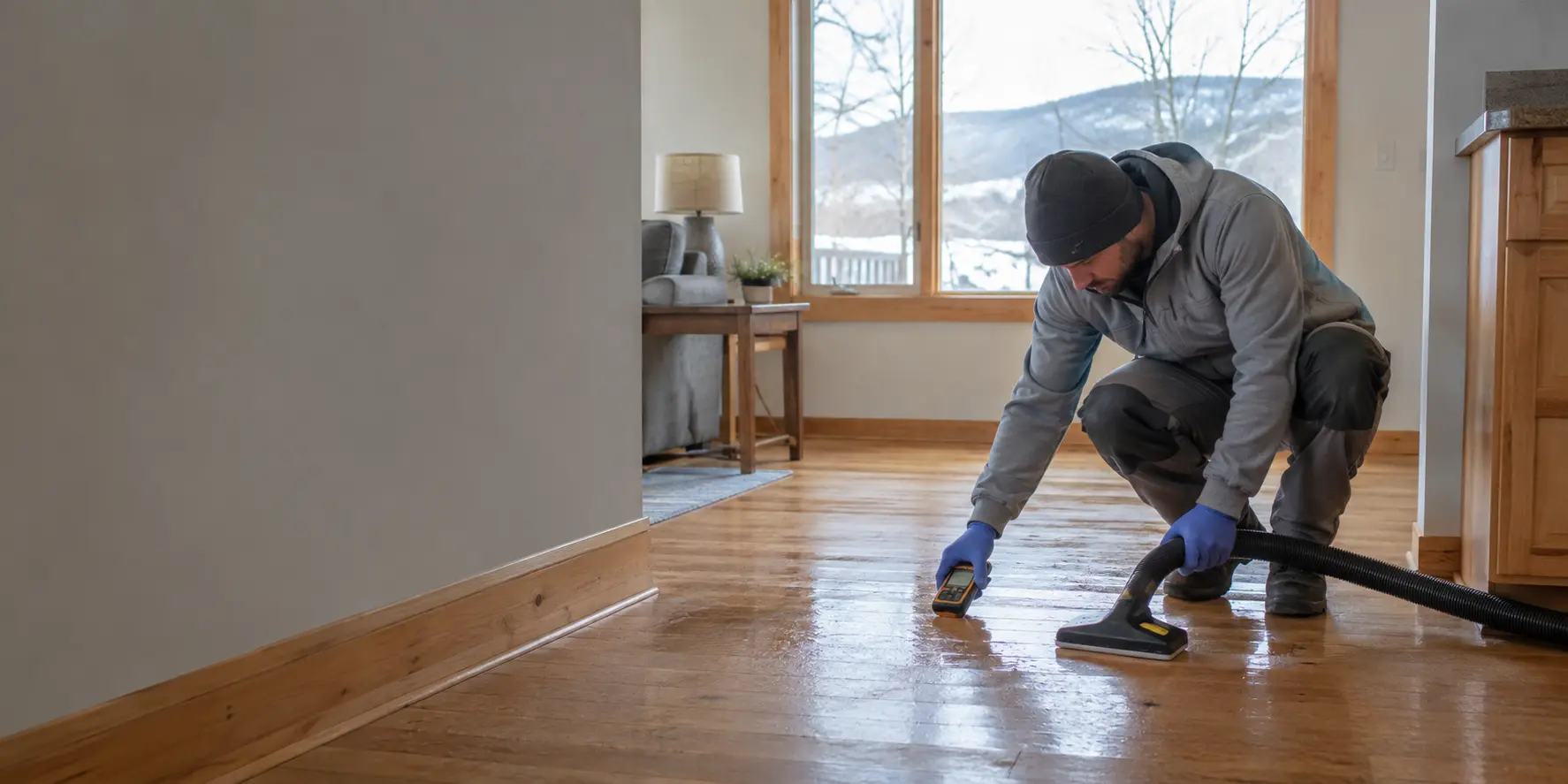
Water extraction, temporary weather protection, moving vulnerable contents, controlled demolition and structural drying are common mitigation tasks. The purpose is to stabilize the property and keep the affected area from getting worse.
Mitigation does not necessarily repair the source or replace finishes. A work authorization should say whether emergency stabilization, monitoring and material removal are included.
Remediation addresses a specific condition
Mold remediation, sewage cleanup, asbestos abatement and lead-safe renovation involve different hazards, standards and qualifications. The term should identify what condition is being addressed, not serve as a vague synonym for all cleanup.
Testing, containment, removal and clearance requirements depend on the material, scope and applicable rule. Ask who owns each decision and whether a separate consultant or licensed contractor is required.
Start the restoration request
Need restoration service for this property?
Send the address, callback number and a short description of the damage. You do not need to diagnose the problem before requesting help.
Reconstruction puts the building back together
Reconstruction may replace drywall, insulation, flooring, cabinets, trim, roofing or structural components after mitigation and remediation are complete. It should use a separate, understandable scope and account for code or environmental requirements.
A single restoration company may handle every phase, or several trades may participate. The customer should still be able to see where emergency work ends, what has been verified and what the repair estimate includes.
Use the terms to clarify responsibility
Ask who stops the pipe or roof leak, who removes water, who handles environmental materials, who verifies drying and who rebuilds. The answer can be one company or several, but each task should have an owner.
This division matters when estimating, scheduling and reviewing warranties. A mitigation warranty does not necessarily cover a later flooring installation, and a plumber does not certify the wall cavity is dry.
Follow the dependencies between phases
Active sources must be controlled for drying to succeed. Contamination and regulated materials must be addressed before ordinary reconstruction. Moisture verification should precede closing concealed spaces.
A written sequence avoids paying for finishes that must be removed again and lets the customer see which decisions are urgent versus dependent on later inspection.
Compare provider scopes accurately
A company advertising full-service restoration should explain which work is performed directly, which work is subcontracted and who contracts with the customer. Ask for credentials that match the service instead of a generic badge list.
Compare estimates using the same phases, affected areas and finish assumptions. A lower emergency estimate may simply omit contents, environmental work or reconstruction.
How the scopes divide on a Vermont project
A Greater Burlington water loss may involve a plumber for the source, a restoration team for mitigation, a specialist for lead or asbestos work and a contractor for reconstruction. One provider can coordinate the project, but the required qualifications and responsibilities remain distinct.
For residential construction, Vermont registration and environmental requirements apply according to the actual work. Ask the performing company to identify itself and the phase it owns instead of relying on a broad restoration label.
Four words, four scopes
Estimates, invoices and insurance letters use the words mitigation, remediation, reconstruction and restoration loosely and sometimes interchangeably, which makes two proposals hard to compare, so each term is defined here by what it covers, what it excludes and how the work it describes is meant to end.
| Term | What it covers | How it ends |
|---|---|---|
| Mitigation | Stops and limits damage: extraction, protection, drying | Materials measure dry |
| Remediation | Addresses a defined contaminant, such as mold or sewage | The defined condition is cleaned and verified |
| Reconstruction | Replaces damaged building materials | Finishes are installed and accepted |
| Restoration | The whole recovery, often all three together | The property is back in service |
Clear answers
Common questions
Is water extraction mitigation or restoration?
It is generally an emergency mitigation task within the broader restoration project.
Is mold work always called remediation?
Professional mold projects are commonly described as remediation because they address growth and the moisture condition, while simple cleaning is not equivalent to a defined remediation scope.
Can reconstruction start before drying is complete?
Affected assemblies should reach a documented drying goal and any required remediation should be complete before they are closed.
Why does my estimate have two separate parts?
Because mitigation and reconstruction are usually scoped, and often contracted, separately. Knowing which part you are looking at is the difference between comparing quotes and comparing nothing.
Can the same company do all of it?
Many do both, some do only mitigation. Either is fine as long as the handoff is defined and you know who is responsible for what when the drying finishes.
Authoritative references