The short answer
Repairs can begin once materials meet the documented drying goal and the reconstruction scope has been agreed and, where applicable, approved by the insurer. The gap between the two is normally caused by the rebuild estimate not being started until drying ended, which is avoidable.
The technical prerequisite
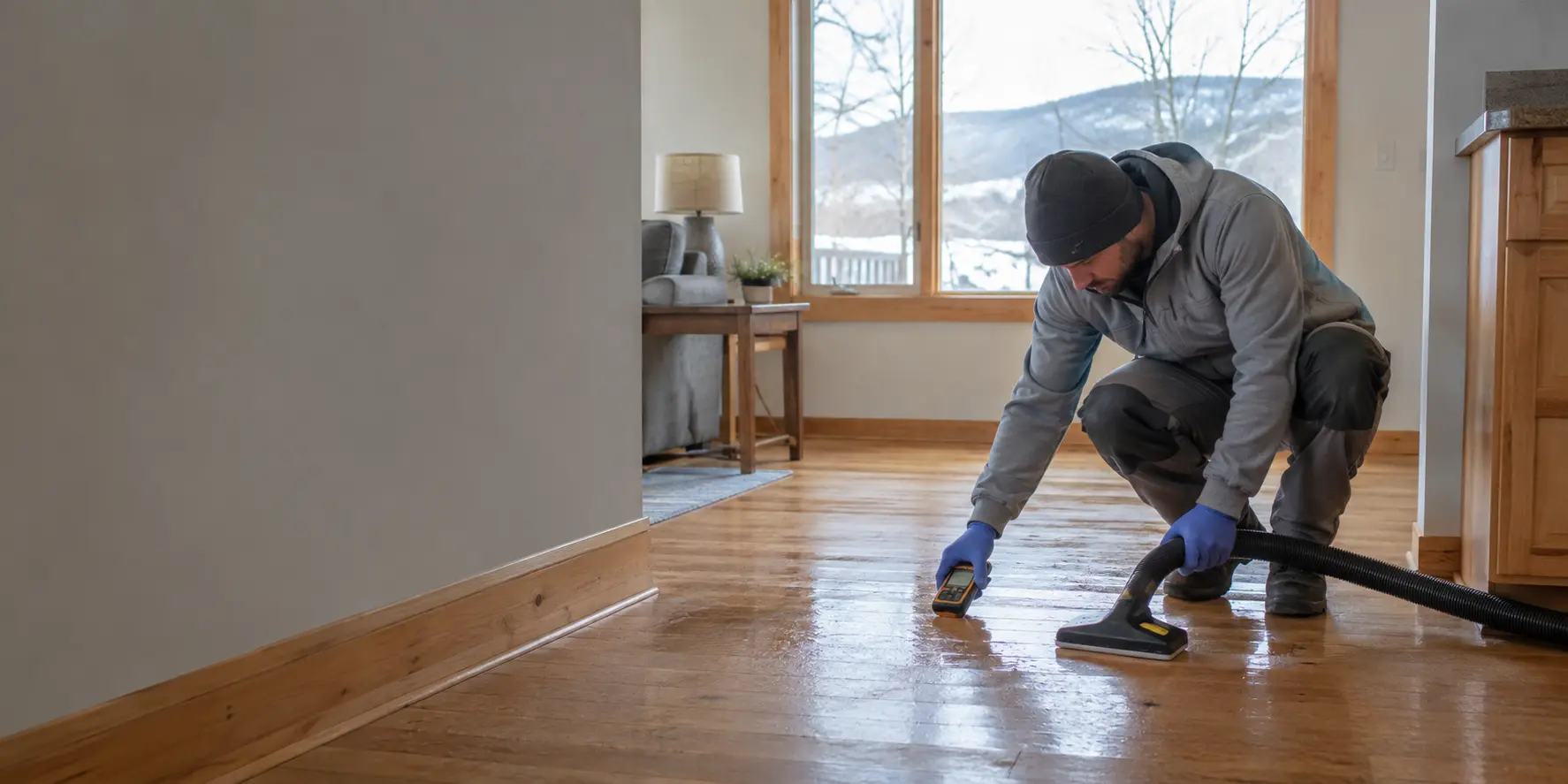
Materials must have reached the documented drying goal against a dry reference. Closing a wall over framing that has not is how a resolved loss becomes a mold project a few months later.
That is the non-negotiable part, and it is confirmed by readings instead of by how a surface feels.
The commercial prerequisite
A rebuild needs a scope, a price and, where insurance is paying, agreement on both. Producing that takes time, and it is frequently not started until mitigation is finished.
That sequencing is the single largest avoidable delay in restoration projects.
Start the restoration request
Need restoration service for this property?
Send the address, callback number and a short description of the damage. You do not need to diagnose the problem before requesting help.
Who is doing the rebuild
Some companies perform both phases; many perform mitigation and hand the rebuild to an affiliated or separate contractor. Where it is a separate company, they need their own scope, their own schedule and their own contract.
Establishing that at the beginning rather than at the handoff avoids a second discovery period.
How to shorten the gap
Almost all of this can happen while the drying equipment is still running.
- Ask for the rebuild estimate to be prepared during drying
- Confirm who will perform reconstruction, early
- Get the insurer the mitigation documentation promptly
- Identify long-lead materials before the scope is finalised
- Settle any lead or asbestos requirements before demolition ends
- Agree how change orders will be handled once walls are open
Partial starts
Where one area has met the drying goal and another has not, reconstruction can sometimes begin in the finished area instead of waiting for the whole property.
That is worth asking about, particularly in a larger property where the last room to dry would otherwise hold everything up.
Do not let the record go cold
The drying documentation, photographs and material lists are what the reconstruction scope is written from and what the insurer settles against.
Collect them at the end of mitigation instead of trying to reassemble them weeks later, especially where a different company is taking over.
Trade availability in the region
Reconstruction in Greater Burlington depends on trades that are also serving new construction and renovation across Chittenden County, and after a regional freeze or flood event the same trades are absorbing everyone else's rebuild at the same time.
In older Burlington-area buildings, matching plaster, period trim and non-standard dimensions add lead time that a modern house does not have. Identifying those items during drying rather than at the rebuild is what keeps them off the critical path.
Two prerequisites for repairs
| Prerequisite | What it means | How to speed it up |
|---|---|---|
| Technical | Materials meet the documented drying goal | Track readings daily |
| Commercial | Rebuild scope agreed and approved where needed | Start the estimate before drying ends |
| Contractor | Rebuild crew available | Book while drying is underway |
| Partial starts | Some rooms may begin early | Ask if dry rooms can proceed |
Clear answers
Common questions
What do I need to keep from the mitigation phase?
Drying readings, the affected-area map, photographs and the list of removed materials. The rebuild scope and the insurance settlement are both written from them.
What proof should I have that drying is finished?
Documented moisture readings on the affected materials meeting the target, from the final monitoring visit. Ask for them before anything gets closed up.
What happens if repairs start too early?
Moisture gets sealed inside an assembly where nothing can reach it, and the problem reappears as staining, odour or growth weeks or months later: behind new finishes.
Authoritative references