The short answer
A restoration company removes water, maps moisture, dries the structure and addresses damaged materials. When water reached walls, floors, ceilings or contents, most burst-pipe losses need both.
Call a plumber for the source
Use a plumber when a pipe, valve, fixture, water heater, boiler connection, drain or private sewer component must be repaired or cleared. Stopping the visible flow does not address water already in the building.
Call restoration for the affected property
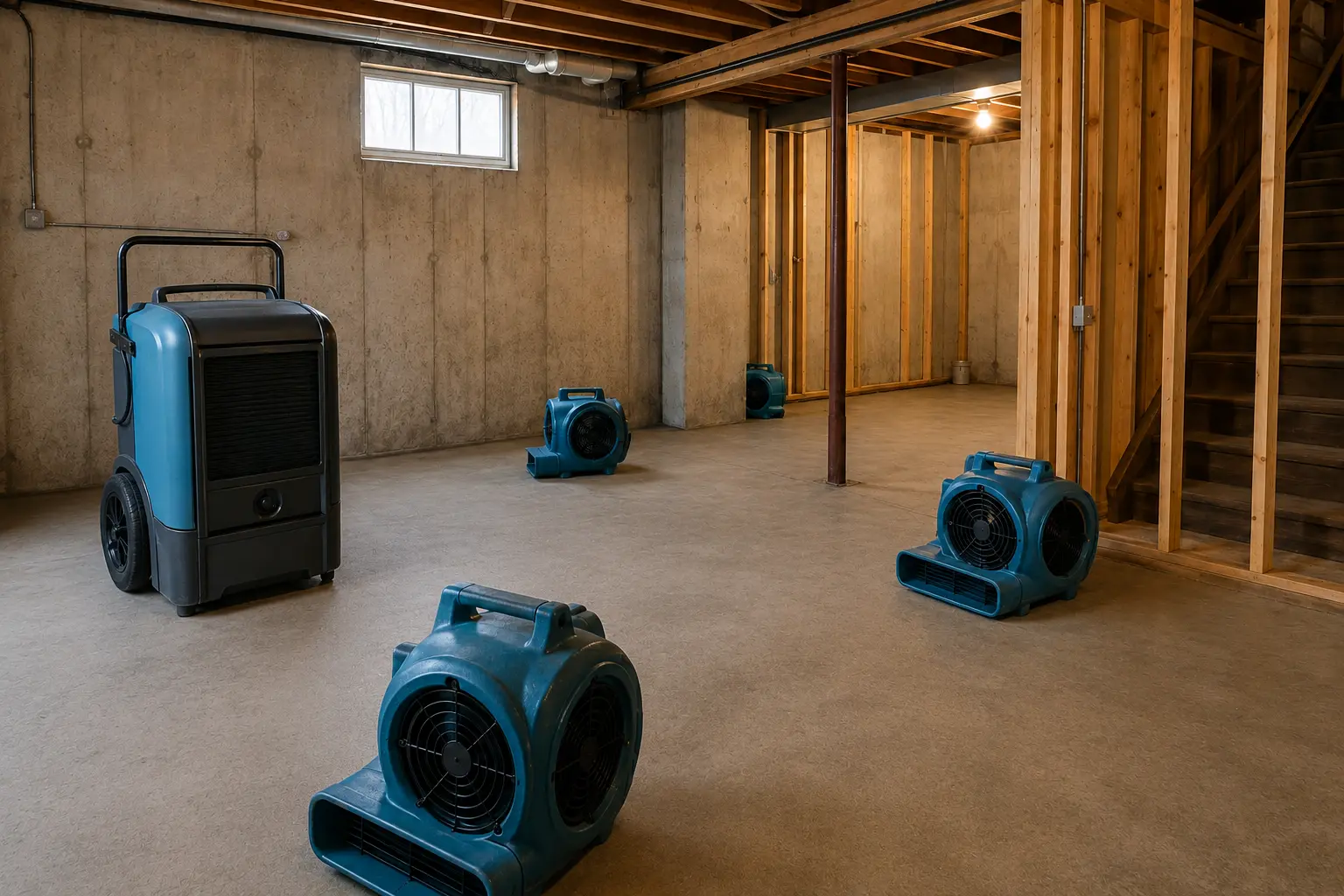
Use restoration help for standing water, wet flooring, walls, ceilings, insulation, cabinets and contents. The provider should document moisture and explain what can be dried versus removed.
Start the restoration request
Need restoration service for this property?
Send the address, callback number and a short description of the damage. You do not need to diagnose the problem before requesting help.
Coordinate access before cutting
If a pipe is inside a wall or ceiling, the plumber and restoration provider should agree on the access needed. This reduces duplicate demolition and helps ensure the opened cavity is dried before repair.
Divide the work by responsibility
The plumber controls the active plumbing source, diagnoses the failed component and completes the pipe repair. The restoration team handles water extraction, moisture inspection, removal of unsalvageable materials, drying, cleaning and documentation. A separate reconstruction scope may replace drywall, insulation, flooring, cabinets or paint after the building is dry.
Ask each company to state its scope in plain language. That prevents a pipe repair invoice from being mistaken for water-damage mitigation and prevents the reconstruction estimate from hiding emergency drying charges.
Follow water below and beside the break
Water from an upstairs or wall-cavity break may travel along framing, through insulation and around penetrations before appearing in a ceiling below. The largest visible stain is not always the wettest part of the assembly. Moisture readings in affected and nearby materials establish the inspection boundary.
Finished basements, layered flooring and insulated exterior walls can hold water after the supply is shut off. A defensible plan explains what can dry in place, what needs access and why a material must be removed.
Winter losses need a recurrence plan
After the immediate loss is controlled, identify why the pipe froze or failed. Heat loss, air leakage, pipe placement, insulation gaps, a failed heating zone or an unoccupied building may all contribute. The correction should match the actual cause instead of relying on a generic recommendation.
For vacant or seasonal properties, document heat settings, monitoring, water shutoff options and who can enter after an alarm. Those preventive decisions are separate from the current restoration bill.
Burst-pipe work in Vermont buildings
Greater Burlington buildings commonly use domestic plumbing, hot-water baseboard heat and commercial sprinkler systems, any of which can create a multi-room water loss when a line fails. The plumber or sprinkler contractor controls that system; the restoration team follows water through insulation, floors and ceilings.
In a seasonal, vacant or rural property, heat status and discovery time can materially change the loss. Provide driveway conditions, lock or alarm access and whether heat has been restored so drying equipment and recurrence prevention can be planned realistically.
Who does what after a burst pipe
A burst pipe usually needs two different trades. The table shows where each one's job starts and stops.
| Task | Plumber | Restoration company |
|---|---|---|
| Stop or isolate the failed pipe | Yes | Not their role |
| Repair the pipe, valve or fixture | Yes | No |
| Extract water and dry walls, floors and ceilings | No | Yes |
| Map moisture beside and below the break | Sometimes visually | Yes, with meters |
| Open walls or ceilings for access | Only as needed to reach the pipe | As the drying scope requires; coordinate with the plumber first |
Clear answers
Common questions
Can the plumber dry the property too?
Some companies offer both services, but verify equipment, training, documentation and the exact scope. Plumbing repair and restoration are distinct tasks.
Can one company coordinate the pipe repair and water restoration?
Sometimes, but the written scope should still separate source repair from extraction, drying, material removal and reconstruction so each responsibility is clear.
Which call should happen first after a burst pipe?
Stop or isolate the water source when possible, then contact plumbing and restoration help promptly. The two scopes can proceed together when water is still affecting the building.
Who do I call first?
Whoever stops the water. If you can close the main yourself, do that and then call both. A restoration company drying a building that is still taking on water is wasting your money.
Will one company do both?
Some do plumbing and restoration in-house; many do not, and either arrangement works as long as somebody owns the handoff. Ask directly instead of assuming the first company on site covers the whole problem.
Authoritative references