The short answer
Sewage, deterioration, trapped wet insulation or stalled drying usually requires selective removal.
The water source changes the answer
Drywall wet by a recent clean-water leak is evaluated differently from drywall exposed to sewage, outside floodwater or long-standing unknown water. Contamination, not only moisture content, can make removal necessary.
The source should be stopped and the water path mapped before anyone decides how much wall to open. A stain or wet baseboard shows where to inspect; it does not define the entire affected area.
Inspect the complete wall assembly
Paper-faced gypsum, wood framing, insulation, vapor retarders, paint and wall coverings dry at different rates. Wet fiberglass may compress, dense insulation can hold water, and vinyl wall covering can slow evaporation.
A restoration professional compares readings in affected and unaffected materials, checks both sides when accessible and decides whether controlled drying can reach the cavity.
Start the restoration request
Need restoration service for this property?
Send the address, callback number and a short description of the damage. You do not need to diagnose the problem before requesting help.
Use measured progress, not appearance
Drywall can look dry while the back paper, bottom plate or insulation remains wet. Repeated readings should show steady progress toward a dry comparison area.
If readings stall, odor develops, the gypsum loses strength or the cavity cannot be dried, selective removal provides access. Repairs should begin only after the remaining assembly meets the documented drying goal.
Questions that decide whether drywall stays
Ask where the water came from, how long the wall was wet, whether insulation is present, whether the gypsum is soft or swollen and whether both sides can release moisture. Paint type, tile, cabinets and wall coverings can all slow the drying path.
A defensible keep-or-remove decision describes these conditions and the monitoring plan. It should not rely on a universal time limit or a moisture meter reading taken only at the paint surface.
What drying in place requires
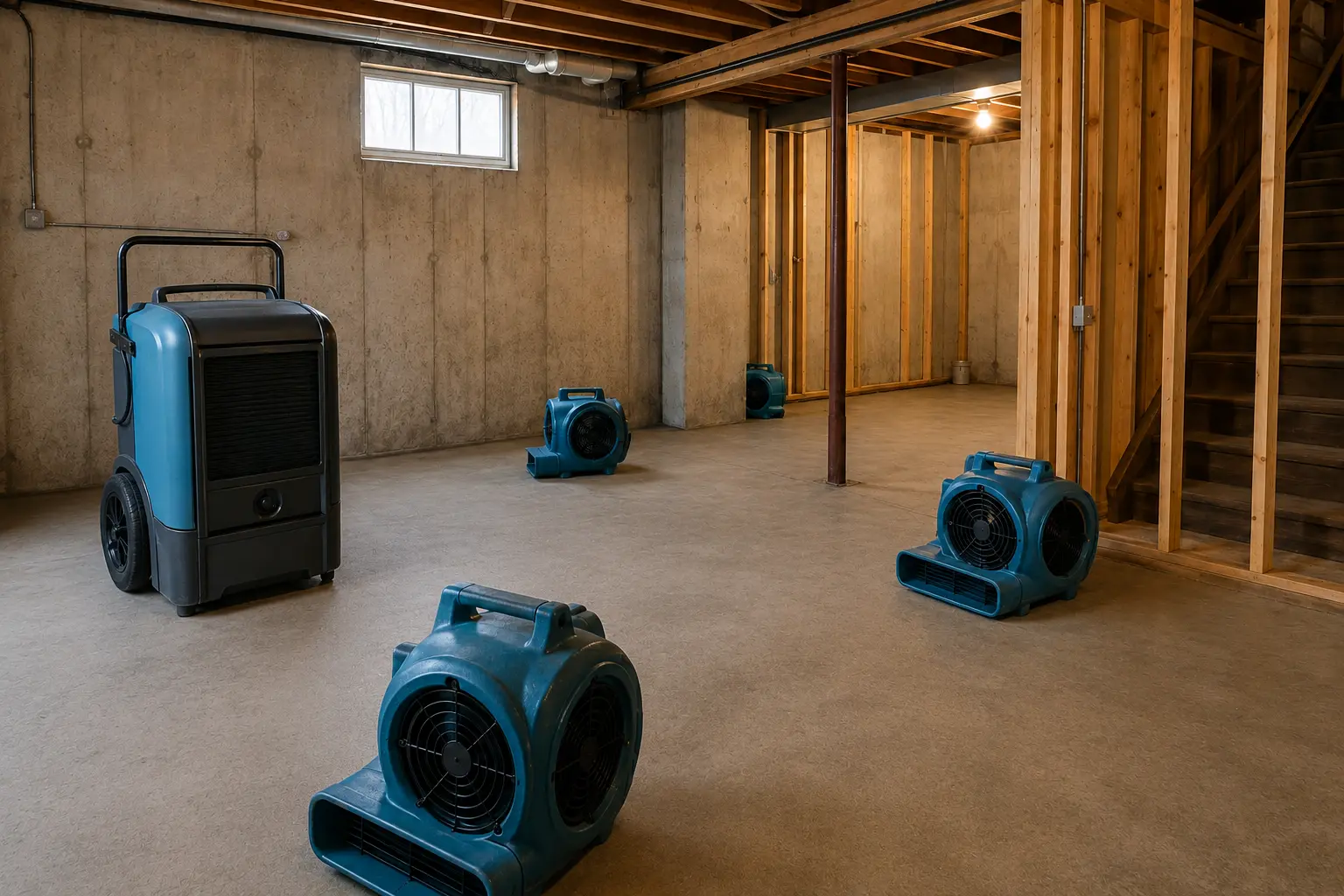
Extraction at the floor edge, removal of baseboard when needed, controlled airflow, dehumidification and cavity access can support drying. Equipment must be suited to the room and adjusted as readings change.
Comparison readings from similar dry material help establish the goal. The record should show the date, location, material and trend instead of a list of unlabeled numbers.
Plan the repair before unnecessary removal
Selective openings can preserve sound drywall while exposing wet bottom plates or insulation. When removal is necessary, defining a practical cut line and documenting trim, texture and paint conditions reduces surprises during reconstruction.
Older finishes may require lead-safe practices, and unusual wall assemblies may require additional testing before demolition. Those constraints belong in the work plan before the wall is opened broadly.
Wet-wall decisions in Vermont construction
Greater Burlington walls may contain fiberglass, cellulose, rigid foam, plaster overlays or vapor-retarding finishes that change the drying path. A standard painted drywall partition can behave very differently from an insulated exterior wall during heating season.
In older homes and rentals, demolition may also trigger lead-safe work or asbestos questions. Selective access, testing when applicable and labeled moisture records help avoid both unnecessary removal and closing a wet cavity.
Wet drywall: dry in place or remove
Drywall sometimes dries in place and sometimes has to come out. The conditions below decide which.
| Condition | Dry in place | Remove |
|---|---|---|
| Source | Recent clean-water loss | Sewage or contaminated water |
| Structure | Firm and intact | Swollen, soft or deteriorated |
| Cavity | Accessible for drying | Wet insulation trapped inside |
| Progress | Readings falling | Readings stalled despite equipment |
| Appearance | Not a deciding factor by itself | Not a deciding factor by itself |
Clear answers
Common questions
How long can drywall stay wet before it needs removal?
There is no universal hour cutoff. Water type, saturation, insulation, temperature, airflow and measured drying progress determine whether it can be restored.
Can drywall exposed to sewage be dried and kept?
Porous drywall directly affected by sewage is generally removed as part of contamination-aware cleanup instead of dried in place.
Does wet drywall always grow mold?
No, but prolonged moisture creates favorable conditions. Prompt source control, drying and moisture verification reduce the risk.
How high above the water line does drywall get removed?
Higher than the visible line, because drywall wicks water upward. The removal height comes from meter readings instead of from where the stain stops.
Can I just cut out the wet part?
That is often exactly what is done, but the cut line and the insulation behind it are decided by readings. Cutting to the visible mark leaves wet material in the cavity.
Authoritative references