The short answer
Compare proposals by phase and area, not one total.
Start with stabilization and the complete damage boundary
Temporary enclosure, board-up, structural access and utility coordination may be needed before detailed cleaning begins. Firefighting water can create a water-mitigation project across rooms with limited direct flame damage.
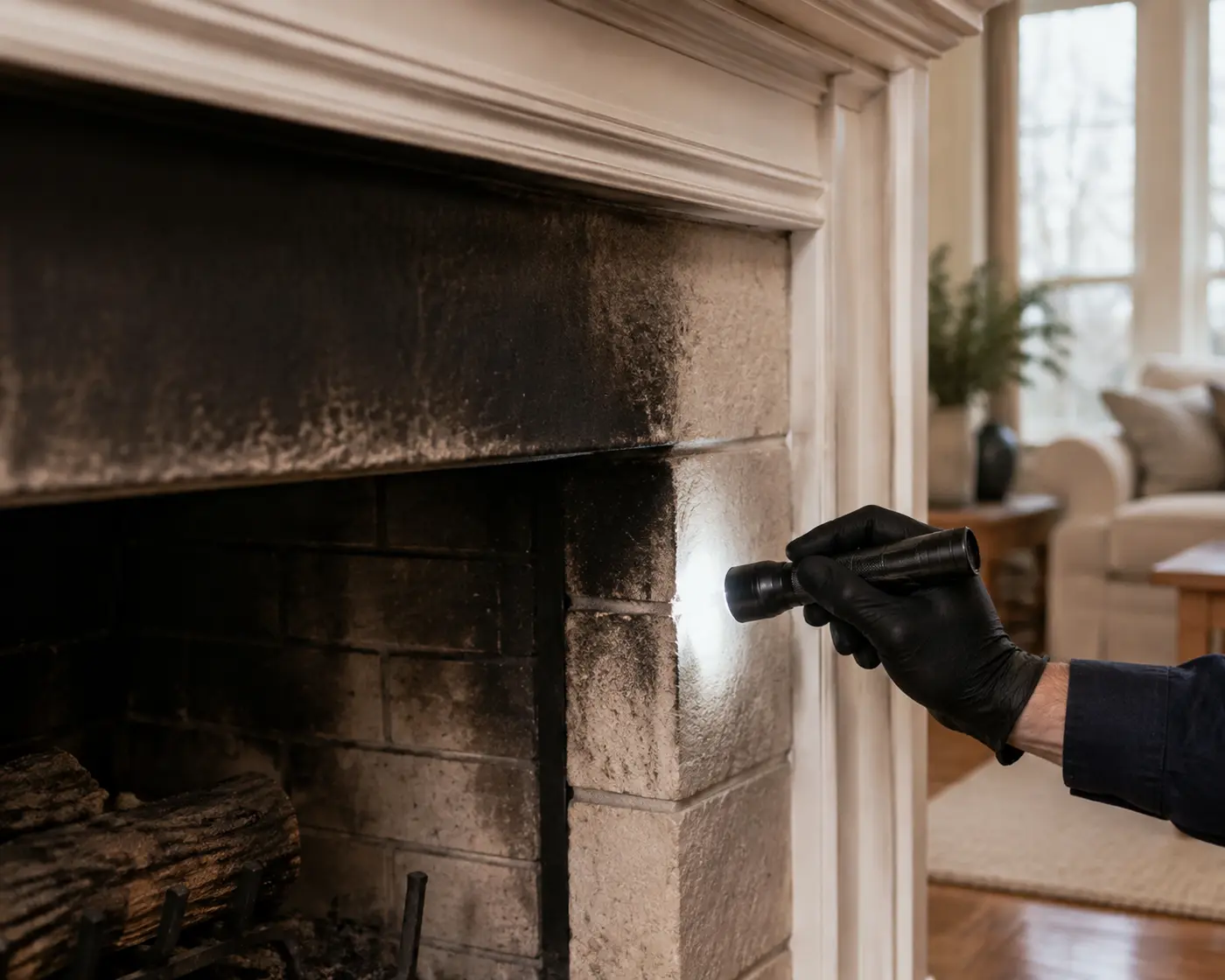
Smoke and soot inspection should include adjoining rooms, closets, cabinets, air pathways and contents. A one-room burn can create a larger cleaning boundary without making every surface a replacement item.
Residue and material determine the cleaning method
Dry soot, oily residue and protein-related deposits can respond differently to cleaning. Painted surfaces, unfinished wood, masonry, metal, textiles and electronics require testing and material-specific decisions.
Labor increases when access is restricted, contents require inventory or residue has entered concealed assemblies. An estimate should identify testing, cleaning, sealing, removal and replacement separately.
Start the restoration request
Need restoration service for this property?
Send the address, callback number and a short description of the damage. You do not need to diagnose the problem before requesting help.
Compare emergency, contents and rebuild phases
Board-up, water removal, debris, building cleaning, contents, odor control and reconstruction may be written as separate estimates. Compare proposals only after confirming which phases and finish assumptions each includes.
Insurance coverage and code upgrades are decided under the policy and applicable requirements. The contractor should explain observed damage, quantities and work instead of promise a claim outcome.
Create a phase-by-phase cost view
List temporary protection, water mitigation, debris, structure cleaning, contents, odor control, environmental work and reconstruction. Confirm whether professional fees, permits and specialty trades are included.
This avoids comparing a stabilization invoice with a full-recovery proposal as though they are the same product.
Document the cleaning boundary
Room-labeled wipe tests, photographs and residue observations help explain why adjacent areas are cleaned or excluded. Contents should be tied to an inventory and disposition.
The contractor should explain surfaces proposed for cleaning, sealing or replacement and how test results affected that choice.
Account for Vermont weather protection
A damaged roof, opening or heating system can require temporary enclosure and heat during a northern Vermont recovery. Those measures protect the building but should be visible and time-bounded in the estimate.
Final repair should identify which temporary items are removed, retained or credited.
A Greater Burlington fire loss may leave a roof opening, disabled heat and firefighting water during freezing conditions. Temporary enclosure, heat and water mitigation can therefore become early cost phases even outside the burn room.
Urban multi-unit access and rural travel create different logistics. The estimate should describe the property-specific need instead of applying a generic Burlington surcharge.
Fire cost by phase
| Phase | What it includes | What drives cost |
|---|---|---|
| Stabilization | Board-up, tarps, temporary enclosure, firefighting-water removal | Openings and weather exposure |
| Residue cleaning | Soot and smoke removal from structure | Residue type and surface |
| Contents | Pack-out, cleaning, storage | Volume and material |
| Odor control | Deodorization after cleaning | Building size and how far smoke traveled |
| Reconstruction | Replace what was removed | Extent of structural damage |
Clear answers
Common questions
Can fire restoration be priced by the size of the burned room?
Not reliably. Smoke, water, contents, access and reconstruction can extend beyond the visibly burned area and require different methods.
Is smoke-odor removal included in fire cleanup?
It may be, but the estimate should identify residue cleaning, contents treatment, air pathways and any deodorization method rather than using one unexplained line.
Does fire-restoration cost include rebuilding?
Not always. Confirm whether the proposal covers stabilization and cleaning only or also includes permits, materials, trades and final finishes.
Why does smoke damage cost more than the fire damage?
Because it covers more of the building. Smoke reaches rooms the fire never entered and HVAC distributes it further, so cleaning and deodorising a whole house can exceed rebuilding the burned area.
Is the firefighting water included in the claim?
It is normally treated as part of the same loss and it frequently affects more area than the fire. It should appear in the scope as a water loss with extraction and drying.
Authoritative references