The short answer
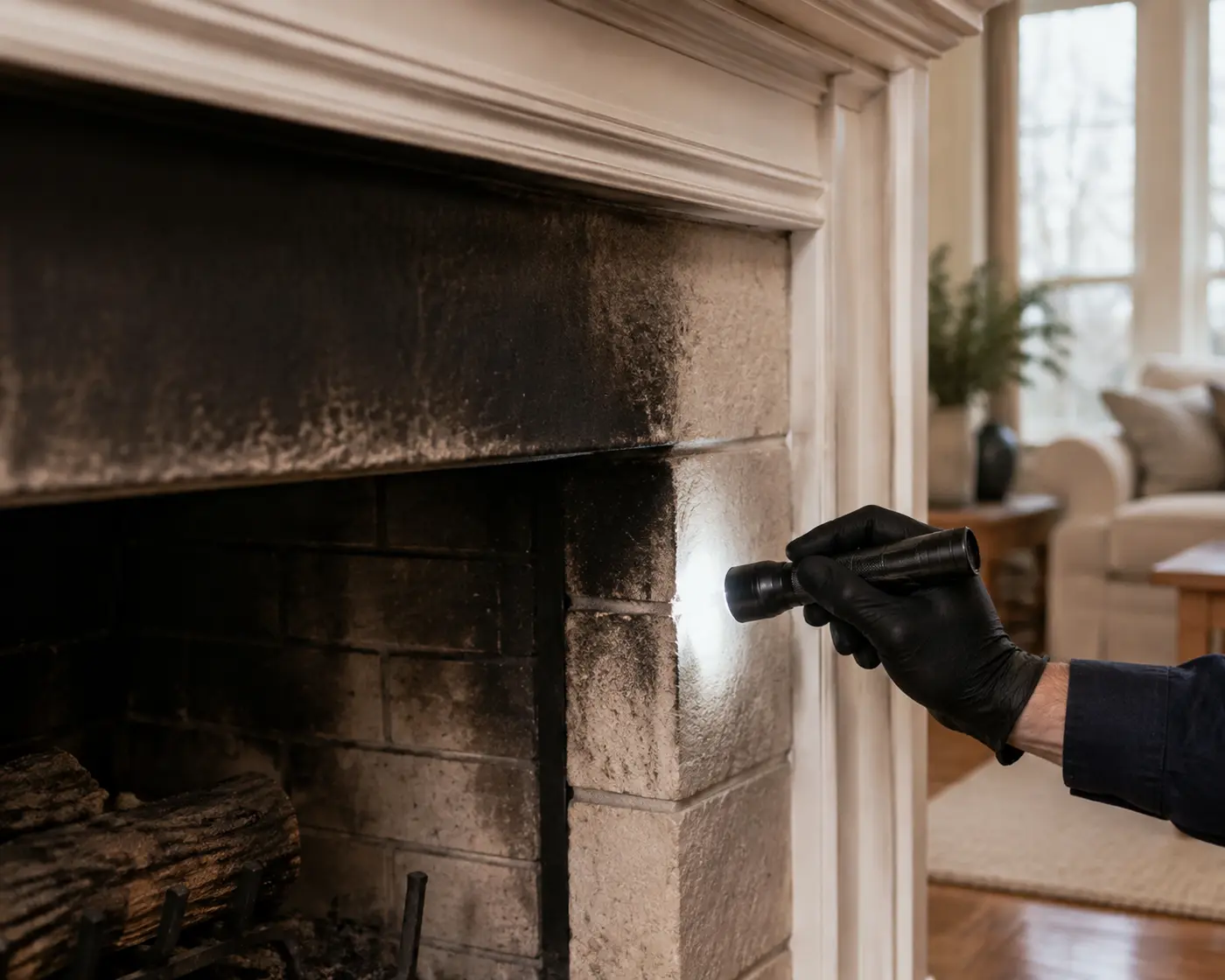
Soot is cleaned first, always. Painting over it traps residue that continues to off-gas odour and frequently bleeds through the new finish. Where residue has penetrated a substrate that cannot be fully cleaned, a sealer is applied after cleaning and before repainting: as a specific remedy, not a shortcut.
Why painting over soot fails
Residue left under a coating continues to off-gas, so the odour remains and becomes noticeable again whenever conditions change, usually when heating comes back on. Many residues also bleed through the new finish over weeks or months.
The result is a surface that has to be stripped and redone, having cost the price of painting it once already.
Cleaning method follows residue type
Dry residues from paper and wood are frequently addressed with dry methods first, because introducing moisture can set them. Oily residues from cooking fires, plastics or a puffback need methods matched to that character.
Getting this wrong in either direction smears residue into the finish, which converts a cleanable wall into one that needs sealing and repainting.
Start the restoration request
Need restoration service for this property?
Send the address, callback number and a short description of the damage. You do not need to diagnose the problem before requesting help.
When sealing is genuinely appropriate
Where residue has penetrated a porous substrate, unfinished wood, some plaster, older painted surfaces in poor condition, cleaning may not fully remove it. A sealer applied after cleaning blocks the remaining odour before the finish coat goes on.
That is a decision made from a finding, not a routine step. If sealing is proposed for every surface without an explanation of what it is addressing, ask.
How to tell what you are being sold
A scope that goes straight to painting is skipping the part that determines whether the result lasts.
- Does the scope include cleaning before any coating?
- What residue type was identified, and how?
- Which surfaces are proposed for sealing, and why those?
- Was a test area cleaned to establish the method?
- Is odour treatment addressed separately from surface work?
Plaster behaves differently from drywall
Plaster is denser and can hold residue differently from paper-faced drywall, and older painted plaster in poor condition absorbs more readily. In the region's older housing that makes test cleaning more valuable before a method is committed to across a whole room.
It also means removal is a bigger, dustier job than removing drywall would be, which pushes the balance toward cleaning where cleaning can work.
Ceilings are the hardest surface
Heat carries residue upward, so ceilings usually take the heaviest deposition, and they are the least forgiving surface to clean unevenly because light rakes across them.
Where a ceiling has been heavily affected, cleaning followed by sealing and a full recoat frequently produces a better result than trying to clean to a perfect finish.
Older plaster walls in Greater Burlington
Plaster over wood lath is the norm instead of the exception in the region's pre-war housing, and in many buildings it carries decades of paint layers of varying condition. Both facts affect how residue is absorbed and how aggressively a surface can be cleaned.
In any pre-1978 building, cleaning or preparation that disturbs painted surfaces brings lead-safe work practice requirements into scope. That belongs in the conversation before a method is chosen, not after the walls have been scrubbed.
Clean, seal or repaint
Soot is cleaned first, always.
| Situation | Approach | Why |
|---|---|---|
| Surface soot | Clean, then repaint | Painting over traps residue |
| Residue penetrated a substrate | Clean, seal, repaint | Sealer as a specific remedy |
| Plaster | Assess separately | Behaves differently from drywall |
| Ceilings | Hardest surface | More careful cleaning |
Clear answers
Common questions
Why does the cleaning method matter so much?
Residue type follows what burned. Using a wet method on a dry residue, or the wrong cleaner on an oily one, smears it into the finish and turns a cleanable surface into one needing sealing and repainting.
Can I just paint over soot?
No. Painting over residue traps it, and both the staining and the odour come back through the new paint. Cleaning first, sealing where cleaning cannot fully remove it, then painting is the sequence.
How do I know if cleaning was enough?
By whether the odour returns once the building is closed up and warm. A wall that reads clean and still smells has residue somewhere the cleaning did not reach.
Authoritative references