The short answer
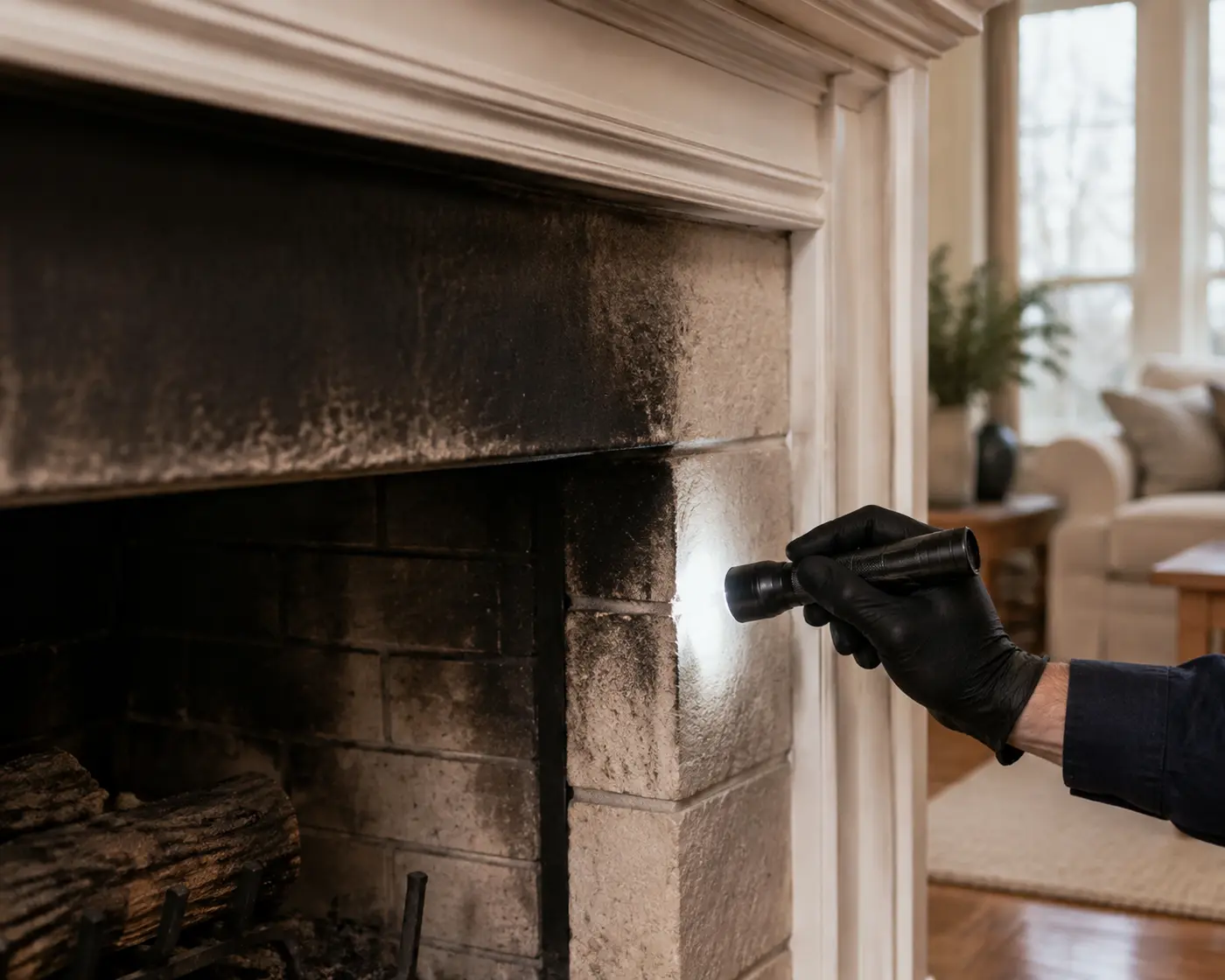
Professional fire restoration begins with residue and surface testing before full cleaning.
Dry and oily residues behave differently
Dry loose soot can sometimes be removed with controlled vacuuming and dry methods before wet cleaning. Oily smoke can smear or drive deeper into a finish when the wrong product or pressure is used.
Mixed fires produce overlapping residues across rooms. The provider should test a small area, identify finish limitations and document whether cleaning, sealing or replacement is proposed.
Protein and synthetic-material fires can spread odor
Cooking and protein-related residues may be difficult to see while producing persistent odor on cabinets, walls and contents. Burned plastics and synthetic materials can create complex deposits that should not be treated as ordinary dust.
HVAC paths, closets, cabinet interiors and porous contents may need separate inspection. Air treatment without removing residue is not a complete cleaning plan.
Start the restoration request
Need restoration service for this property?
Send the address, callback number and a short description of the damage. You do not need to diagnose the problem before requesting help.
Clean in a sequence that prevents redistribution
Work zones, dry removal, surface testing, detailed cleaning and contents handling are ordered to avoid moving residue into cleaned areas. Tools and cleaning solutions should match both the residue and the substrate.
Final odor evaluation comes after source removal and cleaning. Any coating or sealant should be explained as part of a material-specific repair, not a substitute for reachable residue removal.
Test before cleaning a whole room
Choose a representative inconspicuous area and document the method, product, dwell time and result. Test both residue removal and finish response.
A method that works on sealed paint may damage unfinished wood, metal coating, textile or electronic surfaces.
Keep HVAC and contents as explicit work areas
Return-air paths and mechanical systems should be inspected according to actual exposure. Contents can reintroduce odor or residue if returned before treatment is complete.
The work plan should identify which systems or items require a specialty provider instead of assuming the building-cleaning method fits everything.
Verify instead of mask
Final review should look for residue, transferable soil and persistent odor after cleaning. Fragrance does not demonstrate completion.
Where sealing is used, the scope should explain the prepared surface, product purpose and remaining finish work.
Smoke paths in local building types
Burlington and Winooski apartments may share halls and utility paths, while rural homes can contain extensive wood, textiles and outbuildings. Inspection should follow the specific air and contents paths rather than assuming one cleaning boundary.
Cold weather may limit ventilation, but cleaning still begins with residue identification and removal. Temporary heat or enclosure should not be confused with odor treatment.
Residue types and how they behave
Different fires leave different residues. Testing before cleaning prevents smearing the wrong one.
| Residue | Typical source | Cleaning consideration |
|---|---|---|
| Dry soot | Fast, hot fires in paper and wood | Can often be lifted with controlled vacuuming |
| Oily or smeary soot | Slow, smoldering fires and plastics | Smears if wiped dry; needs different cleaners |
| Protein residue | Kitchen fires | Nearly invisible but strong odor |
| Mixed residue | Fires with several fuels | Test by surface before broad cleaning |
Clear answers
Common questions
Can household cleaner remove soot from walls?
It can smear or set some residues and damage paint. Professional testing identifies whether dry, detergent, solvent or replacement methods fit the residue and surface.
Why is smoke damage visible in rooms without fire?
Heat, pressure and air movement can carry fine residue through doors, openings, cabinets and mechanical pathways beyond the burn room.
Does sealing a wall remove smoke residue?
A coating may be part of repair after appropriate cleaning, but it should not replace removal of reachable residue or correction of damaged materials.
Why does wiping soot make it worse?
Dry soot smears and is driven into porous surfaces by pressure and moisture. The residue type has to be identified before anything touches it, which is why the advice is to leave it alone.
What is protein residue?
The near-invisible, strongly odorous film left by a cooking fire that smouldered rather than flamed. It coats everything, shows very little, and needs a different cleaning approach from dry soot.
Authoritative references