The short answer
Stop the source when it can be done without entering a hazardous area, protect the property from additional water, document the visible damage and start extraction and moisture assessment promptly. Do not wait for every insurance question to be answered before preventing more damage.
1. Check for immediate hazards
Call 911 for active fire, gas odor, collapse risk or another life-safety emergency. Stay out of standing water near electrical equipment, outlets or a service panel. Do not stand beneath a bulging ceiling.
2. Stop the source only if it is safe
Use an accessible fixture or building shutoff for a plumbing supply loss. Do not improvise around electrical equipment, boilers or damaged utilities. A plumber or utility may need to stop the source.
Start the restoration request
Need restoration service for this property?
Send the address, callback number and a short description of the damage. You do not need to diagnose the problem before requesting help.
3. Call for extraction and drying
Provide the address, callback number, source, when discovered, affected rooms and levels, water depth, hazards and access. A restoration provider handles water and materials; the source trade may be separate.
4. Document without delaying
Take a few wide and close photographs from dry, safe locations. Move accessible dry valuables, but do not enter contaminated water or begin uncontrolled demolition. Start a simple timeline of calls and decisions.
Take wide photos of each room, then closer photos of the source area, water lines, damaged finishes and affected contents. Record when the loss was found and any steps already taken. Save invoices, work authorizations, equipment records and material-removal notes in one file.
Documentation should show what was affected and what work was performed; it should not turn the first hours into a photo project while water continues to spread. The insurer decides coverage, while the restoration scope should be based on the actual building conditions.
Build the first call around the property damage
Give the service address, where the water started, whether it is still entering, when it was discovered, the rooms and levels affected, and the best callback number. Mention finished basements, hardwood, built-in cabinets, ceiling damage and any water that reached a lower floor. Those details help determine extraction, access and equipment needs before arrival.
If the source is a pipe, roof, appliance or drain, source repair may require a plumber, roofer or appliance professional. Restoration addresses water in the building and the materials it affected. Both scopes can move at the same time when the property continues to get wet.
What should happen during the first restoration visit
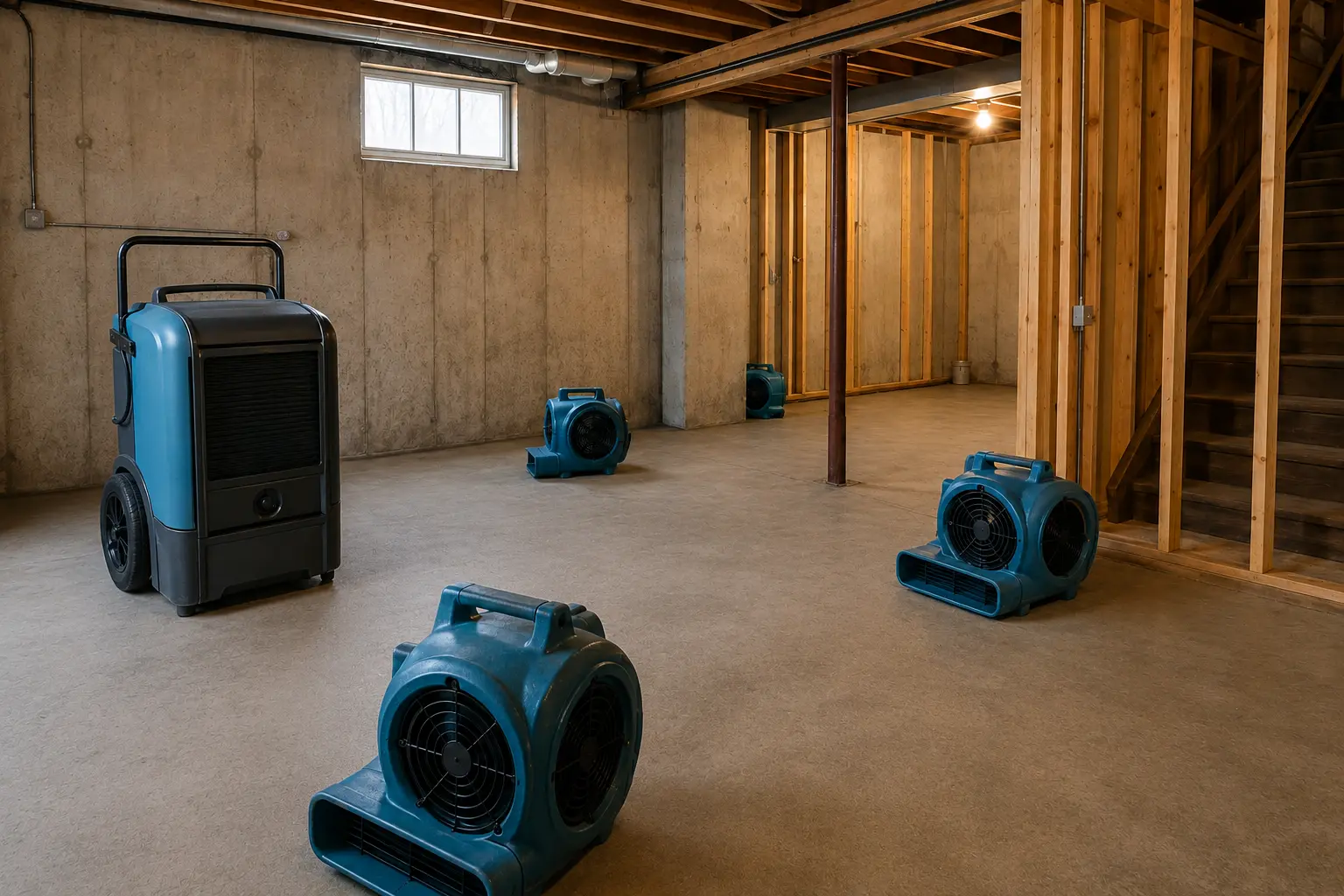
The restoration professional should inspect beyond the visible puddle, identify the water source and likely contamination level, extract standing water and establish where moisture traveled. The drying plan may include removal of materials that cannot be restored, air movement, dehumidification and repeat monitoring.
Before work expands, ask what is emergency mitigation, what is optional, what is expected to be removed and whether repairs are included. A clear authorization should identify the company performing the work and how changes to the scope are approved.
Applying the first-hour plan in Greater Burlington
In the Burlington area, the same first-call information has to work for a city apartment, a South Burlington commercial suite and a rural home with a long winter driveway.
Cold-weather losses can involve a frozen domestic line, hydronic heat line or sprinkler pipe. Spring and summer losses may involve groundwater, roof runoff or outside flooding. Naming the likely source helps, but measured inspection should still define where water traveled.
The first hour at a glance
The order of the first steps matters more than speed for its own sake, because safety comes before property, stopping the source comes before extraction and documentation should never delay the call for help, so this puts the first decisions in sequence and gives the reason each one comes where it does.
| Step | What to do | Why it comes here |
|---|---|---|
| Hazards | Call 911 for fire, gas odor or collapse risk; stay clear of electricity in wet areas | Safety comes before property |
| Source | Stop the water only if you can do it without entering a hazard | Every extra minute of flow enlarges the loss |
| Extraction | Call for water removal and moisture assessment | Liquid water left in place keeps spreading into materials |
| Documentation | Photograph visible damage and note times, without delaying the call | Records support both the scope and any claim |
| Insurance | Report the loss, but do not wait for answers before protecting the property | Preventing more damage is not the insurer's decision |
Clear answers
Common questions
Should I open windows?
Not automatically. Outdoor humidity, temperature, contamination and the drying setup all matter. Follow the responding professional's plan.
Is removing standing water enough after a leak?
No. Flooring, wall bases, cabinets, ceilings and insulation may still hold moisture, so extraction should be followed by material readings and a monitored drying plan.
Should I turn the power off myself?
Only if the panel is dry and you can reach it without standing in water. If either is in doubt, stay out and have the utility or an electrician do it. No amount of property is worth an electrocution risk.
Can I start cleaning up before anyone sees it?
Photograph everything first: wide shots of each room, close-ups of damage, and the source if you can see it. After that, removing standing water and moving contents to dry ground helps. What you cannot do later is recreate the evidence you cleaned away.
How fast do I actually need to act?
Hours matter. Materials absorb progressively, and the window before mold becomes a factor in a warm building is short. The difference between a same-day response and a three-day one is usually the difference between drying materials and replacing them.
Authoritative references