The short answer
Do not re-enter until the fire service says the structure is safe. Do not switch on utilities that were exposed to heat or water, because heat can damage insulation and wiring in ways that are invisible until something arcs or shorts later. Photograph everything before touching it, get the incident report reference, notify your insurer, and have the building secured against weather and entry. Cleaning waits until the scene is documented.
Re-entry is not your decision
A building that looks structurally fine after a fire may not be. Heat weakens framing and connections in ways that are not visible, hot spots can persist inside assemblies, and suppression water adds load. The fire service decides when it is safe to enter.
That applies to a small contained fire as much as an obvious one. The instinct to go straight in and assess the damage is the instinct to resist.
Utilities stay off until someone qualified says otherwise
Electrical components exposed to heat or to suppression water can fail in ways that are not apparent from a visual check. Restoring power to them risks both the equipment and the building.
The same applies to gas appliances that were exposed to heat. Each of those is a specific trade's assessment, and none of them is a restoration company's call.
Start the restoration request
Need restoration service for this property?
Send the address, callback number and a short description of the damage. You do not need to diagnose the problem before requesting help.
Documentation is perishable
Once cleanup starts, contents are moved, residue is wiped and damaged material is removed. The photographic record of how the property was found is the only evidence of that state, and it is what the contents portion of a claim is built from.
Photograph room by room, including inside cupboards and drawers, before anything is disturbed. It takes an hour and it is the highest-value hour of the whole process.
What to take out on the first visit
Keep it to what you genuinely need for the next few days, and leave the wider contents question to a documented inventory.
- Identification and essential documents
- Medication and medical equipment
- Keys, wallets, phones and chargers
- A few days of clothing, if it is uncontaminated
- Items of genuine irreplaceable value, photographed in place first
- Pet supplies and anything a pet needs
Residue is corrosive and it does not wait
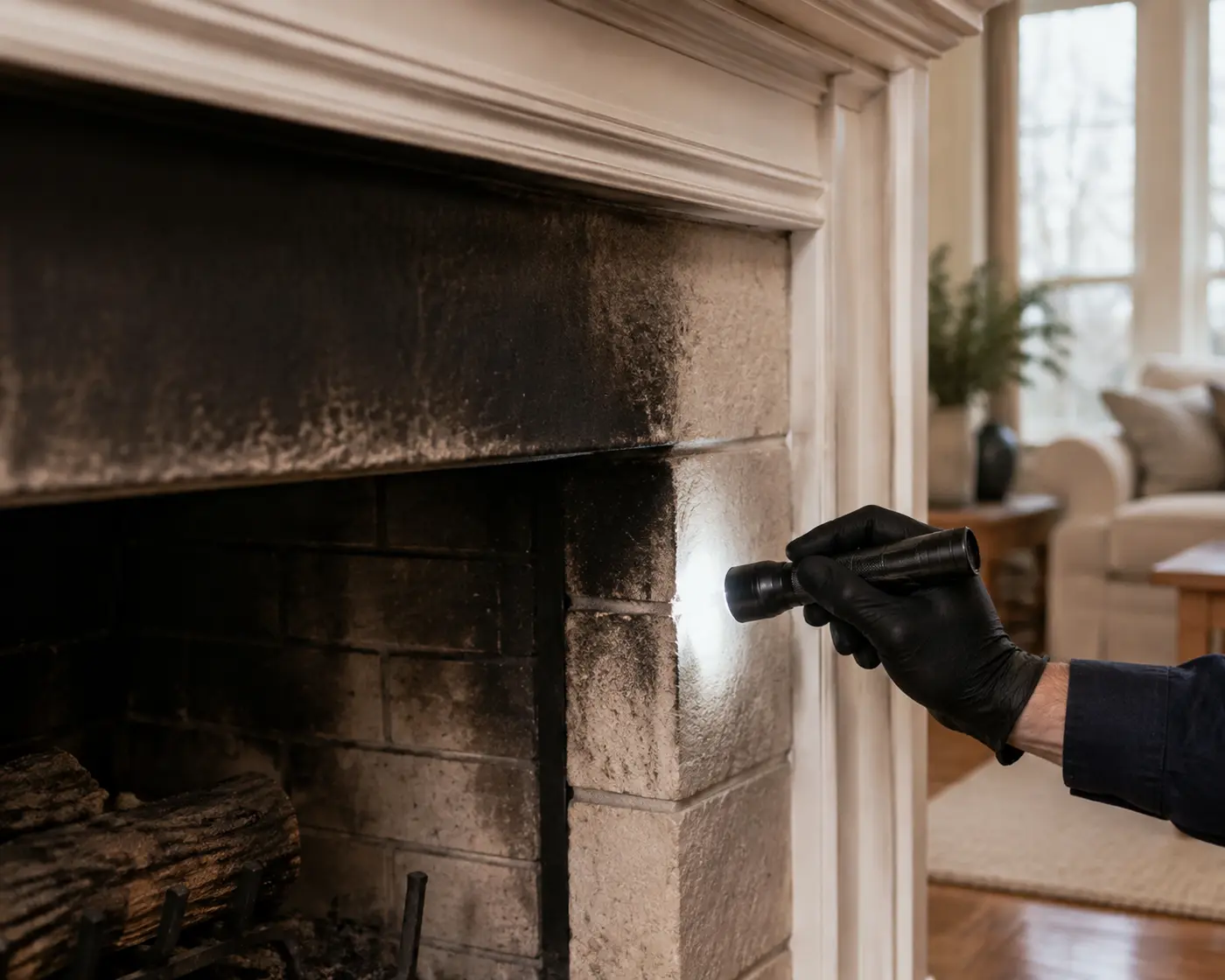
Smoke residue continues to act on surfaces after the fire. Metals corrode, some finishes etch and porous materials absorb further with time. That is why stabilisation matters within days instead of weeks.
It is also why dry-wiping surfaces yourself frequently makes things worse: it drives residue into the finish and spreads it. Leave surface cleaning to a scope that is matched to the residue type.
Where you will be living
Additional living expenses are commonly part of a homeowners policy, and the insurer will usually want to be part of that arrangement from the start instead of presented with it afterwards.
Keep every receipt. This is one of the more straightforward parts of a fire claim and it is frequently underclaimed simply because nobody kept the record.
Winter fires in Greater Burlington
A fire in a Vermont winter produces a second problem immediately: the building loses heat, and suppression water inside a structure that is now unheated freezes. Frozen suppression water in walls, ceilings and plumbing turns a fire loss into a compound fire and water loss.
That is why board-up and temporary heat are more urgent here in January than the same fire would be in July, and why draining the plumbing may be the right immediate call in a building that will sit unheated while the scope is worked out.
The first day after a fire
Several things in the first day after a house fire are not your decision, including when you may re-enter and when utilities may be switched on, and several things are perishable, such as photographs of the scene and the condition of residue, so the table separates what to wait for from what to do now.
| Item | Rule | Why |
|---|---|---|
| Re-entry | Wait for the fire service | Structure may be unsafe |
| Utilities | Keep off until cleared by a qualified person | Heat can damage wiring invisibly |
| Documentation | Photograph before touching | Evidence is perishable |
| Residue | Do not wait | Corrosive over time |
| Housing | Arrange a place to stay | Recovery takes time |
Step by step
The first day after a fire
The order of operations in the twenty-four hours after a fire is extinguished, before any cleaning or restoration work begins.
Wait for clearance to enter
Structural stability and hot spots are the fire service's assessment. Do not re-enter a fire-damaged building until you have been told it is safe, however superficial the damage appears.Leave utilities off
Do not restore electricity, gas or water to systems that were exposed to heat or suppression water until the relevant trade has assessed them. Wet or heat-damaged electrical is not a judgement for a property owner.Document before anything moves
Photograph every room, every damaged surface and the contents in place. This record is the basis of the contents claim and it cannot be recreated once cleanup starts.Get the incident reference
Obtain the fire incident report reference. Most insurers will ask for it, and it fixes the date and nature of the event on the record.Notify the insurer
Report the loss promptly. Prompt notification supports the claim, and the insurer may also arrange emergency services under the policy.Secure the building
Board up openings and cover damaged roofing. An open fire-damaged building takes weather and invites entry, and policies generally expect reasonable steps to prevent further loss.Retrieve essentials only
Take identification, medication, essential documents and what you need for a few days. Leave the wider contents question to the documented inventory that follows.
Clear answers
Common questions
Can I turn the power back on?
Not to anything that was exposed to heat or suppression water, until the relevant trade has assessed it. That is not a property owner's or a restoration company's decision.
What do I need from the fire service?
The incident report reference. Most insurers require it, and it fixes the date and nature of the event on the record.
What should I do first with the insurer?
Report immediately and ask about additional living expenses coverage from the first call. Keep every receipt from day one: accommodation, clothing, meals.
Authoritative references