The short answer
A preset three-day or five-day promise is not a substitute for moisture documentation.
What controls drying time
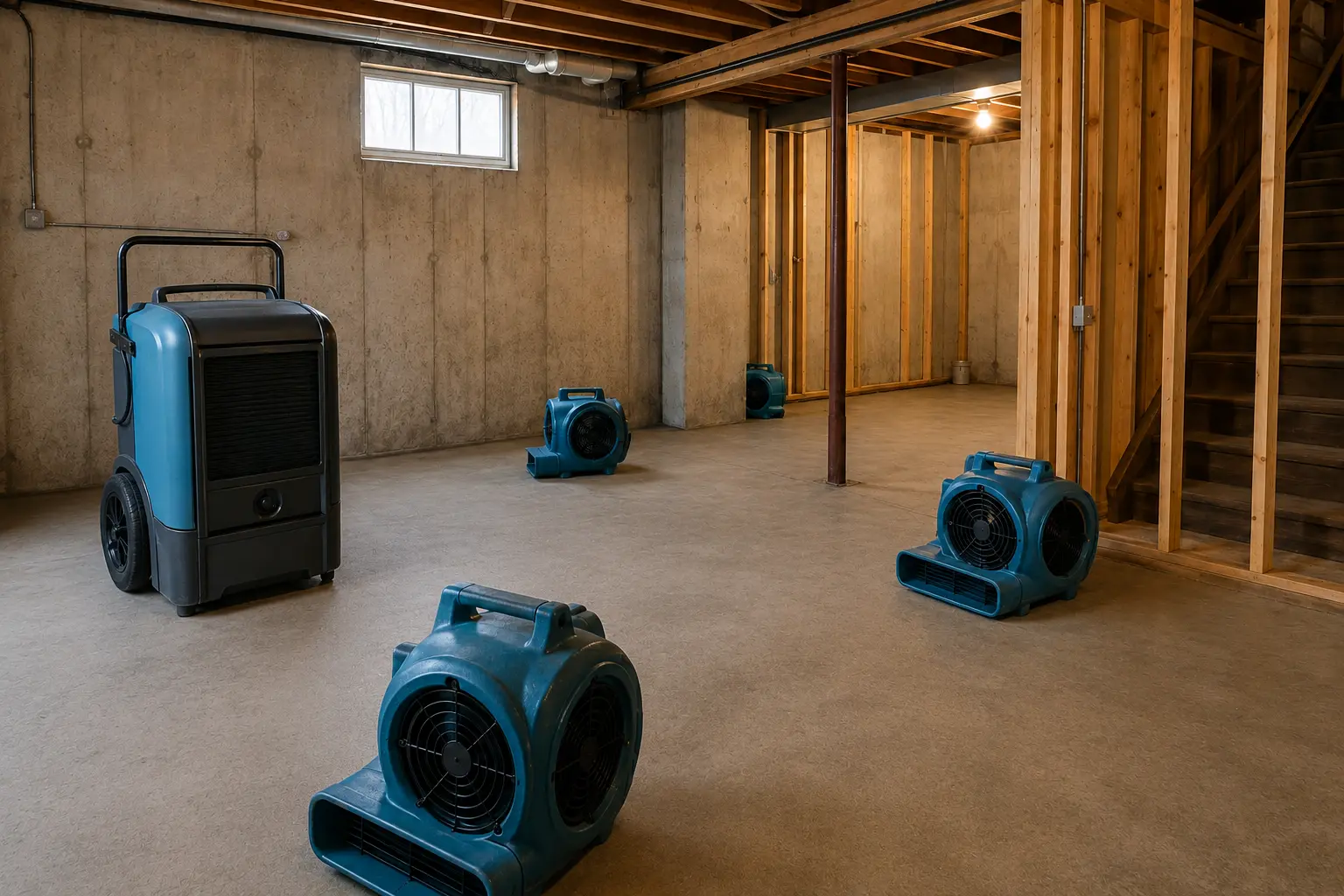
The starting moisture level, material type, temperature, humidity, airflow, dehumidification, access and whether wet materials remain in place all affect the timeline. Water trapped behind finishes or below flooring can extend the process.
What happens during daily monitoring
The restoration team records material and atmospheric readings, checks equipment operation and adjusts placement as conditions change. Progress should be based on measurements rather than the number of days equipment has been running.
Start the restoration request
Need restoration service for this property?
Send the address, callback number and a short description of the damage. You do not need to diagnose the problem before requesting help.
When repairs can begin
Drywall, insulation, flooring and paint should not conceal unresolved moisture. The team should explain the drying goal and the readings used to decide when the affected area is ready for repair.
Different materials release moisture at different rates
Exposed framing, paper-faced drywall, dense hardwood, concrete, cabinets and insulated cavities do not dry on the same schedule. Coatings, vapor barriers and multiple floor layers can slow moisture movement even when room air conditions look favorable.
The inspection should identify the slowest relevant assembly and whether access or selective removal would improve drying without unnecessary demolition.
Read the trend, not one number
Monitoring should compare readings at consistent labeled locations over time. Falling material moisture and controlled indoor humidity show progress; flat readings can signal blocked airflow, insufficient dehumidification or a continuing source.
Ask for the planned visit frequency and what change would cause equipment to be repositioned, added or removed. Equipment that runs without review is not a documented drying program.
Know what completion means
A drying goal may be based on unaffected comparison materials, the characteristics of the material and the intended repair. The provider should explain the standard used and record the final condition.
A room feeling comfortable or a surface feeling dry does not answer whether the subfloor, wall cavity or cabinet base is ready to be enclosed.
Drying-time variables in northern Vermont
A heated winter interior, humid summer basement and storm-damaged unconditioned building create different drying environments. Greater Burlington weather is context, but daily material and air measurements should still determine when equipment changes or leaves.
Dense wood, plaster, insulated walls and layered floors in older local buildings may release moisture slowly. That does not justify a preset duration; it just makes access, measurement locations and progress records more important.
What lengthens or shortens drying
Drying ends when the readings say it has ended and not when a preset number of days has passed, which is why the useful question is what lengthens or shortens the process for your building, including how wet the materials were at the start, what they are made of, how open they are, and whether the air around them is warm, moving and dry.
| Variable | Slower drying | Faster drying |
|---|---|---|
| Starting saturation | Deeply wet, long exposure | Light, recent |
| Material | Dense wood, plaster, concrete | Thin, porous, open materials |
| Access | Closed cavities, under cabinets | Open surfaces or opened cavities |
| Air conditions | Cold or humid conditions | Warm, dehumidified air with airflow |
| Verification | Readings stalled and equipment adjusted | Steady daily decline in readings |
Clear answers
Common questions
Can a room dry overnight?
A small surface loss might, but wet cavities, subfloors and insulation usually require more time and verification.
Why is the equipment still running when the surface feels dry?
Surface feel does not show moisture inside or beneath building materials. Readings determine whether deeper materials are still drying.
Why is my neighbour's job finished and mine isn't?
Different materials, different volumes and different start times. Plaster, hardwood, concrete and masonry all hold water far longer than drywall over studs, and a loss found a day later can take several days longer to dry.
Can drying be sped up?
More equipment and better containment help to a point, but materials release water at their own rate. Pushing beyond that just moves air around.
When do repairs start?
After drying is verified by readings, not alongside it. Closing up a wall that is still wet is the most expensive shortcut available in this work.
Authoritative references