The short answer
From late spring through early autumn, humid outdoor air condenses on cool surfaces in Vermont basements, crawl spaces and closed buildings, supporting growth with no leak involved. Controlling it means dehumidification instead of ventilation, keeping stored organic material off cold surfaces, and not airing out a cool basement on a humid day.
The mechanism, without a leak
Warm air holds more moisture than cool air. When humid outdoor air enters a cool basement or crawl space, the surfaces there are below the temperature at which that air gives up its moisture, and it condenses on masonry, framing and stored goods.
Nothing has leaked. The building is simply collecting water out of the air, day after day, for months.
Why the instinct to ventilate backfires
Opening up a damp-smelling basement on a warm day feels right and usually adds moisture. The incoming air carries more water than the space can hold at its temperature.
Ventilation helps when the outside air is drier than the inside air. Through a humid Vermont summer, that is often not the case in a cool basement.
Start the restoration request
Need restoration service for this property?
Send the address, callback number and a short description of the damage. You do not need to diagnose the problem before requesting help.
What controls it
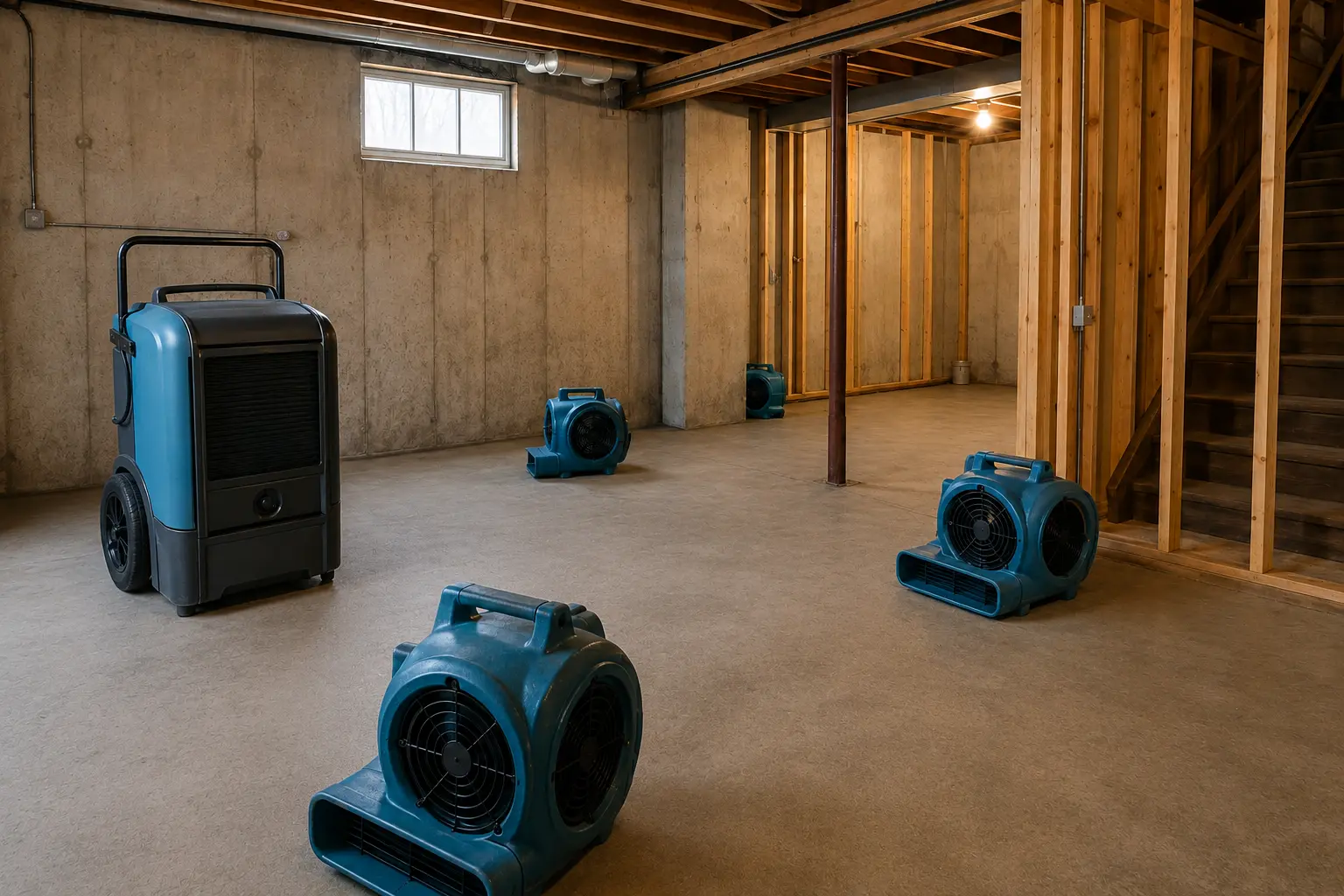
A dehumidifier sized for the space, ideally with a condensate drain so it does not depend on someone emptying a tank, run through the humid months, is the reliable control.
Alongside it: keep organic material off cold surfaces, keep a gap between stored goods and exterior walls, and address any liquid water entry separately.
A seasonal routine
Timing matters more than effort. These are cheap, and they are what stop a maintenance issue becoming a remediation project.
- Start dehumidification before the humid season, not after odour appears
- Confirm the condensate drain runs and does not back up
- Check gutters and downspout discharge each spring and autumn
- Keep stored goods in sealed bins, off the slab, away from walls
- Confirm exhaust fans vent outside, not into an attic or soffit
- Check crawl space ground cover is intact and sealed
Seasonal and vacant properties
A camp or second home closed from October to May is the highest-risk building type in the region. Nobody sees the space, heating is off or minimal and moisture accumulates unopposed.
Where power remains on, a dehumidifier with a drain and a remote humidity sensor is a modest cost against the alternative. Where power is off, ground cover and reducing stored organic material matter more.
When maintenance has become remediation
Odour that persists, visible growth on finishes or stored items, and materials that feel damp to the touch indicate the problem is past the point that dehumidification alone resolves.
At that stage moisture control remains necessary but is no longer sufficient. Affected materials need addressing before the space will clear.
The Greater Burlington seasonal pattern
The regional cycle is a wet spring from snowmelt and rain into cool masonry, followed by a humid summer that loads those same surfaces from the air. Properties near Lake Champlain and along the Winooski River corridor see both ends of it.
Vermont's climate assessment documents warming and shifting precipitation patterns for the state, which points toward longer humid periods instead of shorter ones. Treating summer moisture control as a standing seasonal task rather than an occasional reaction fits that direction.
A humid-season routine
Humid-season problems come from air, not leaks. The table shows the routine that keeps moisture down.
| Action | Why | When |
|---|---|---|
| Run a dehumidifier with the space closed | Removes moisture without importing more | Late spring through early autumn |
| Avoid airing out a cool basement | Warm humid air condenses on cool surfaces | Humid days |
| Keep stored organic material off cold surfaces | Cardboard and fabric absorb moisture | Year round |
| Check seasonal and vacant buildings | Closed buildings hold humidity | Before and during the season |
Clear answers
Common questions
What humidity level should I aim for?
Guidance for households generally points to keeping indoor humidity moderate instead of at a single universal number. The practical test is whether surfaces stay dry and odour stays away.
When is Vermont's humid season worst indoors?
July and August carry the highest dew points, and lakeside property holds that condition later into autumn than inland property because the water moderates air temperature.
Authoritative references