The short answer
Drain water and fresh supply water can require different cleanup decisions.
Distinguish supply water from drain water
A broken hot or cold supply line can release a large volume quickly. A drain or standpipe overflow may contain detergent, soil and wastewater from the load, which changes cleaning and material decisions.
Record which cycle was running, where water first appeared and whether fixtures or drains elsewhere were affected. An appliance or plumbing professional handles the failed component while restoration addresses the building.
Trace water under and below the laundry area
Sheet vinyl, tile, laminate and floating floors can conceal water at seams and edges. Water may also enter wall bases, cabinets, floor penetrations and the ceiling below before it becomes visible.
Moving the appliance safely may require shutting off utilities and protecting flooring. Moisture readings should cover adjacent rooms and lower levels instead of stopping at the laundry doorway.
Start the restoration request
Need restoration service for this property?
Send the address, callback number and a short description of the damage. You do not need to diagnose the problem before requesting help.
Coordinate drying with the appliance repair
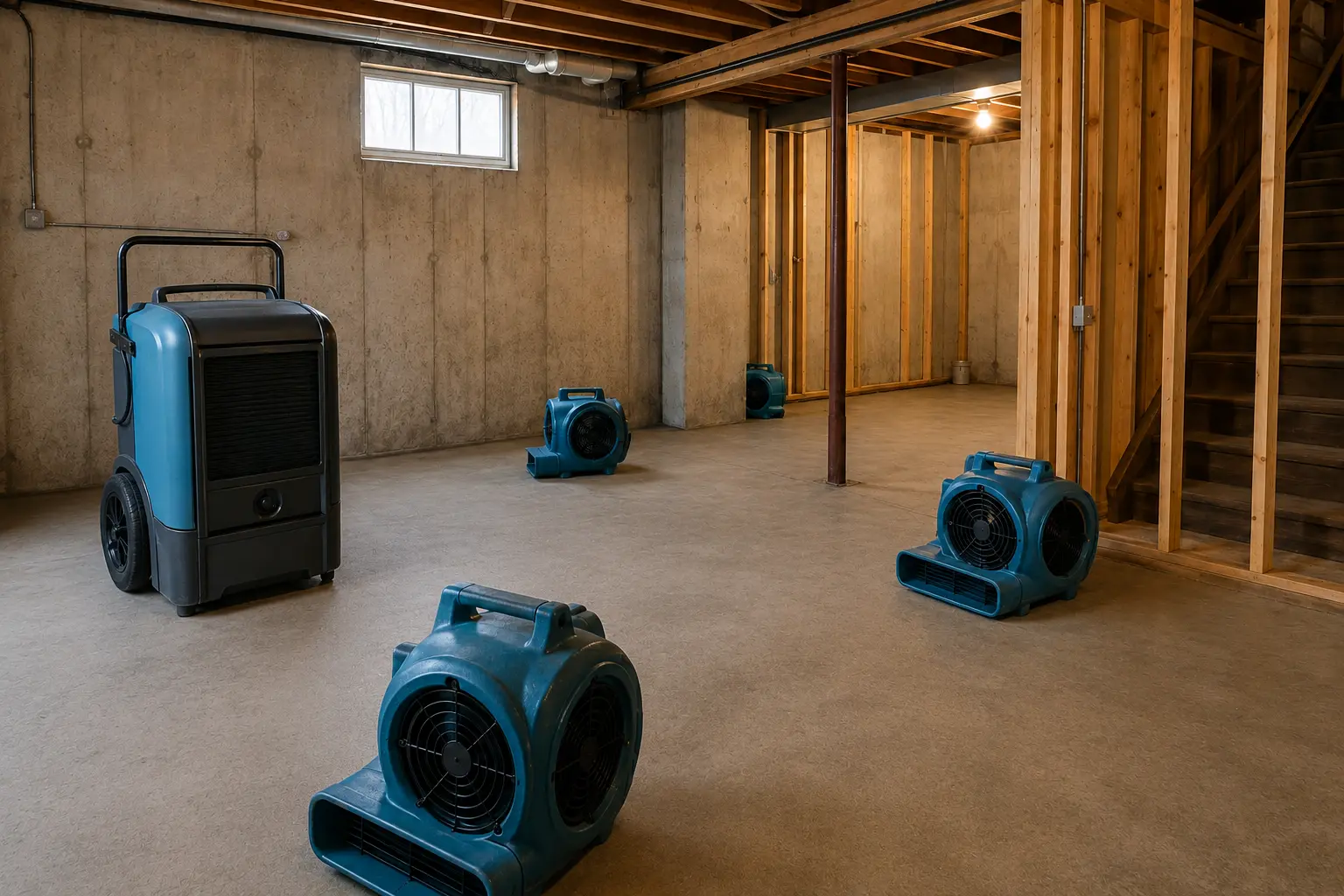
Extraction and selective access reduce the drying load. Air movement and dehumidification are then adjusted from repeat measurements in the floor, wall and ceiling assemblies.
Reconnect and test the appliance only after the source repair and access conditions allow it. Keep appliance, restoration and finish-repair invoices separate so each responsibility remains clear.
What to document before the machine moves
Photograph hose connections, the standpipe or drain, water at floor edges and rooms below.
An appliance technician or plumber can use that history to diagnose the source, while the restoration team uses it to set the initial contamination and inspection assumptions.
Laundry-room finishes can hide migration
Machines often sit over resilient flooring, trays or finished floors with penetrations at supplies and drains. Water can bypass the visible surface through edges or holes and wet the subfloor.
A small access point or reading from below may answer the question without removing an entire floor. The scope should explain what evidence supports the chosen approach.
Close the project with a source test
Once the appliance or plumbing repair is complete and the building is dry, the responsible trade should test operation without creating a new water release. Restoration records should identify the dry goal separately.
Replace hoses or modify the drain only according to the qualified source professional's findings; the water-damage invoice should not bury those changes.
Laundry-room water damage in local homes and rentals
Stacked apartment laundries, basement machines and upper-floor laundry rooms around Greater Burlington create different access and cross-floor risks. Landlords and managers should identify affected units and who can authorize entry.
Older flooring layers and renovated laundry alcoves can conceal water. Inspection should reflect the actual assembly rather than assuming every local property has a modern waterproof floor.
Supply water and drain water
The type of water from a washing machine changes the cleanup decision. The table compares the two.
| Water type | Source | Cleanup implication |
|---|---|---|
| Supply water | A split hot or cold supply line or hose | Usually treated as clean if caught promptly |
| Drain water | Overflow of the machine's discharge or standpipe | Can carry soap, lint and contamination, so more materials are removed |
| Migrated water | Either type, under flooring or into the level below | Inspect below the laundry area before finishes are closed |
Clear answers
Common questions
Can water travel under tile after an overflow?
Yes. Water can enter at edges, penetrations, grout defects or adjacent assemblies and affect underlayment or subfloor even when the tile surface appears intact.
Who repairs washing-machine water damage?
An appliance technician or plumber handles the machine or connection; a restoration company removes water, dries the building and prepares damaged finishes for repair.
How much water can a supply line release?
It runs at mains pressure until somebody closes a valve, so a failure that happens while you are out can put a very large volume into the building. That is why the location and duration matter more than the appliance.
Should I replace rubber washing machine hoses?
Braided stainless lines are the common upgrade and rubber lines have a finite life. On a second-floor or over-finished-space laundry it is a small change against a large exposure.
The floor looks dry now. Is it?
Not necessarily. Water runs under the machine, along the floor structure and into the room below, so readings on the surrounding floor, wall base and the ceiling beneath are what settle it.
Authoritative references