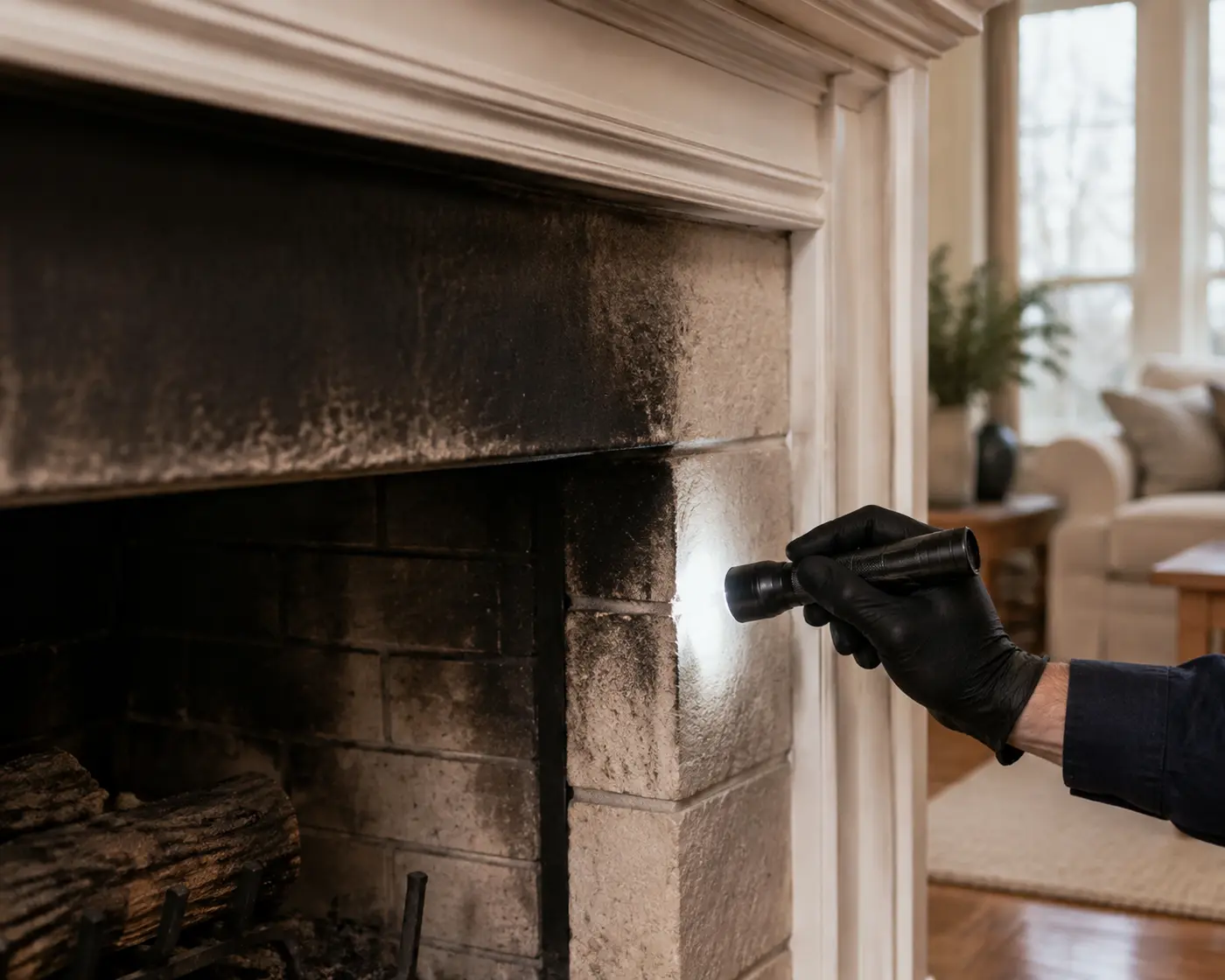
The short answer
A chimney fire can damage the flue liner and heat adjacent framing even when it is contained and brief. The chimney needs professional inspection before the appliance is used again, and the building needs assessment for smoke and creosote residue, which is oily, strongly odorous and different from ordinary wood smoke.
What a chimney fire damages
The flue liner takes the direct heat and can crack, spall or separate. That matters because a compromised liner allows heat and combustion products into the surrounding structure the next time the appliance is used.
Framing and materials adjacent to the chimney may also have been heated within the wall or ceiling assembly, which is not visible from the room and is a reason for assessment instead of assumption.
Do not relight it
Using the appliance again before the chimney has been inspected is the significant risk. A damaged liner turns the next ordinary fire into a structural one.
Inspection is a chimney professional's work and it is separate from any restoration scope. It comes first, because it determines whether the appliance can be used at all.
Start the restoration request
Need restoration service for this property?
Send the address, callback number and a short description of the damage. You do not need to diagnose the problem before requesting help.
Creosote residue in the rooms
It behaves more like a grease residue than a dry wood-smoke residue, so cleaning is matched accordingly.
It deposits on the surfaces nearest the appliance first and travels with heat from there, reaching ceilings, adjacent rooms and any textiles in the vicinity.
What to have assessed
The chimney and the building are two separate assessments and both belong before the appliance is used again.
- The flue liner, by a chimney professional
- Framing and materials adjacent to the chimney
- The hearth, surround and any combustible clearances
- Textiles and soft furnishings near the appliance
- Any smoke detector or alarm that operated
Why residue clings near a woodstove
The area immediately around a woodstove already runs warm, which helps residue bond as it deposits. Combined with creosote's oily character, that makes surfaces near the appliance the hardest part of the clean.
Dry-wiping there tends to smear rather than lift. It is worth leaving to a method matched to the residue.
Prevention is a maintenance conversation
Chimney fires follow creosote accumulation, which follows how the appliance is run and how often the flue is swept. Burning unseasoned wood and running the appliance slow and cool both accelerate accumulation.
That is a chimney professional's advice instead of a restoration company's, and it is the conversation to have while the inspection is happening.
Wood heat across the Greater Burlington service area
That combination of heavy seasonal use and older chimneys in older buildings is why chimney fires are a recurring regional loss instead of an unusual one. In a pre-1978 building, any repair disturbing painted surfaces around the chimney breast also brings lead-safe requirements into scope.
After a chimney fire
The flue and the building both need assessment.
| Item | Concern | Action |
|---|---|---|
| Flue liner | Cracks or damage from heat | Professional inspection before reuse |
| Adjacent framing | Heat damage | Assess |
| Creosote residue | Oily, odorous | Cleaning matched to it |
| Do not relight | Safety | Wait for clearance |
Clear answers
Common questions
Is smoke damage from a woodstove different?
Wood smoke residue and odour behave differently from an oil puffback or a grease fire, and the cleaning approach follows the residue. Tell the restoration company what burned.
Authoritative references