The short answer
A puffback happens when unburned fuel ignites all at once inside an oil-fired heating system, distributing oily soot through every room the system's ductwork or air handler touches, often reaching rooms with no obvious connection to the mechanical space at all. The residue is fine, greasy and smears badly when wiped dry, so cleaning is matched to the residue rather than attempted with household products. The heating system itself needs servicing before it is restarted.
What actually happens
The resulting pressure pushes soot out of the appliance and into the building: through the ductwork on a forced-air system, or into the surrounding space on a boiler.
Nothing burns. The damage is entirely the residue, which is why owners often do not realise the extent until they touch a surface.
Why the residue behaves so badly
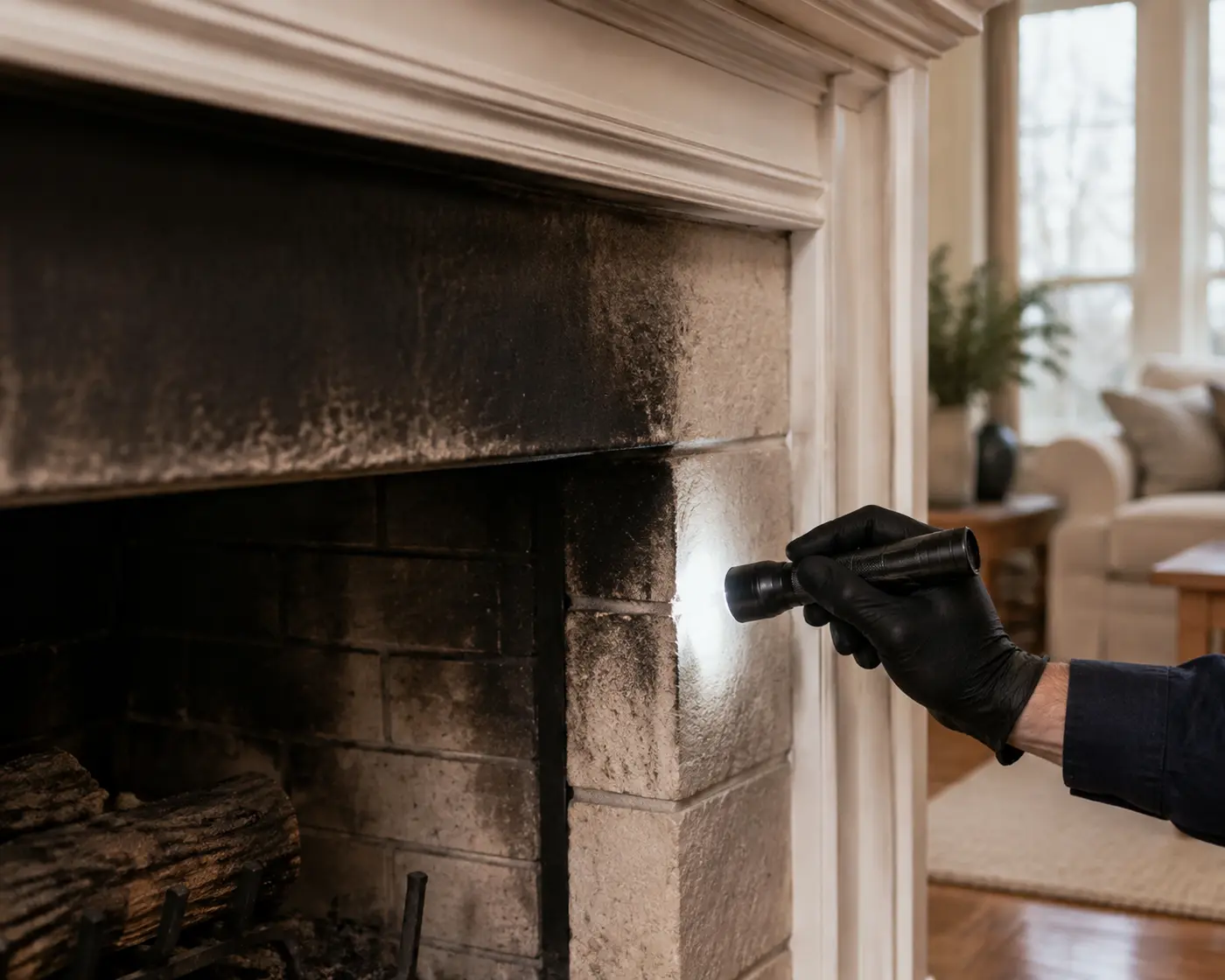
Puffback soot is fine and oily, which is a difficult combination. It settles into fabric, on to walls and ceilings, along the tops of trim and inside cupboards, and it does not brush off.
Wiping it dry smears it into the finish and spreads the affected area. Using the wrong cleaner sets it. This is the residue type that most reliably gets worse with well-intentioned first aid.
Start the restoration request
Need restoration service for this property?
Send the address, callback number and a short description of the damage. You do not need to diagnose the problem before requesting help.
Fix the system before restarting it
A puffback indicates a fault: delayed ignition, a fuel or air problem, a maintenance issue. Restarting the system without servicing it invites a repeat, sometimes during the cleanup.
That servicing is a heating engineer's work and is separate from the restoration scope, though the two need coordinating so the building is not re-contaminated after cleaning.
What gets affected
Puffback residue reaches further than people expect, particularly on a forced-air system where the ducts deliver it to every room.
- Textiles: curtains, upholstery, bedding, clothing in wardrobes
- Inside cupboards, drawers and closed storage
- Electronics, through cooling vents
- Carpet and rugs, where it works into the pile
Do not test-clean it yourself
The single most common way a puffback claim gets larger is an owner wiping a wall to see how bad it is. That smears the residue into the paint and frequently means the wall now needs sealing and repainting instead of cleaning.
If you want to know how far it reached, use a clean white cloth pressed gently on an inconspicuous area instead of a wipe, and stop there.
The insurance position
A puffback is generally treated as a sudden and accidental event rather than a maintenance failure, though the insurer decides and a documented history of deferred servicing can complicate it.
Keep the service record for the heating system. It is the evidence that most directly addresses the maintenance argument.
Oil heating is common across this region
Oil-fired heating remains widespread in Vermont, particularly in the older housing stock across Burlington, Winooski and the rural towns, which makes puffback a more common loss here than in regions that moved to gas earlier.
The long heating season compounds it: systems run hard for months, and a fault that would surface briefly in a milder climate has a full Vermont winter to develop. Annual servicing before the heating season is the practical prevention.
Puffback: what to do in order
The system must be fixed before restart.
| Step | What | Why |
|---|---|---|
| Shut the system off | Do not restart it | Repeat puffbacks add residue |
| Service the system | By a qualified technician | Fix the cause first |
| Assess residue | Room by room | Reaches connected rooms |
| Professional cleaning | Do not test-clean it yourself | Oily soot smears |
Clear answers
Common questions
Can I clean puffback soot myself?
It is the residue type most likely to get worse with household cleaning. It is fine and oily, smears into finishes when wiped dry, and can be set by the wrong cleaner.
Do I need the ducts cleaned?
On a forced-air system that distributed the soot, very likely. It should follow an inspection that states what was found instead of being recommended by default.
What causes a puffback?
Unburned fuel igniting in the combustion chamber and forcing oily soot through the distribution system. It is a heating-system fault, so the appliance needs servicing as well as the building cleaning.
Why is puffback soot so hard to clean?
It is oily and it goes everywhere the ductwork reaches, including surfaces nobody associates with the furnace. Wiping it with the wrong method smears it permanently into finishes.
Authoritative references