The short answer
A credible estimate itemizes those conditions instead of relying on one flat price.
Water source changes the cleanup scope
A recent plumbing release, groundwater, storm runoff, sump overflow and sewage backup can require different cleaning, protective equipment and porous-material decisions. The estimate should state the observed source and working contamination assumption.
Water depth affects extraction, but shallow water under finished walls or flooring can create a broader scope than deeper water in an unfinished utility area.
Finished materials and contents add separate work
Drywall, insulation, flooring, cabinets, stair finishes and stored contents are evaluated individually. Moving, cleaning, inventorying or disposing of contents should be visible in the estimate rather than hidden inside a general cleanup charge.
Mechanical systems, fuel equipment, electrical components and older building materials may require separate trades or environmental controls.
Start the restoration request
Need restoration service for this property?
Send the address, callback number and a short description of the damage. You do not need to diagnose the problem before requesting help.
Compare complete scopes
Confirm whether an estimate includes extraction, demolition, cleaning, equipment, monitoring, disposal, contents and reconstruction. Drainage, foundation, sump or plumbing correction may be a separate source-repair project.
Compare quantities and assumptions room by room. A lower total can simply exclude rebuilding the basement or correcting the condition that allowed water to return.
Build a cost comparison worksheet
For each proposal, list the rooms, water assumption, extraction, removal quantities, cleaning, equipment, monitoring, contents, disposal and repair. Mark every allowance or excluded item.
This exposes scope differences that a bottom-line comparison hides and gives the contractor a precise question when an item is unclear.
Access and utilities can change the job
Stairs, low ceilings, long equipment routes, power conditions and occupied living areas affect setup and labor. A rural property may add driveway or generator planning during a regional event.
These conditions should be explained, not bundled into an unsupported emergency premium.
Use the current loss to support prevention decisions
Photographs of entry points, sump behavior, runoff and water lines can help price the right drainage or plumbing correction after restoration.
Prevention work should match the supported cause. A generic system proposal is not automatically part of a defensible cleanup estimate.
Local conditions that change a basement scope
Finished basements, sump systems, groundwater, spring thaw and private utilities vary across Burlington-area properties. Town name alone does not set the price; water source, materials, contents and access do.
Rural winter access or a widespread storm can affect logistics, while older finishes can affect repair. Both should appear as explained scope items instead of unsupported local premiums.
What changes a flooded basement scope
Two flooded basements can need very different work. These conditions change the scope.
| Variable | Larger scope | Smaller scope |
|---|---|---|
| Water source | Groundwater or storm water | Recent clean plumbing release |
| Depth and area | Deep, widespread | Shallow, contained |
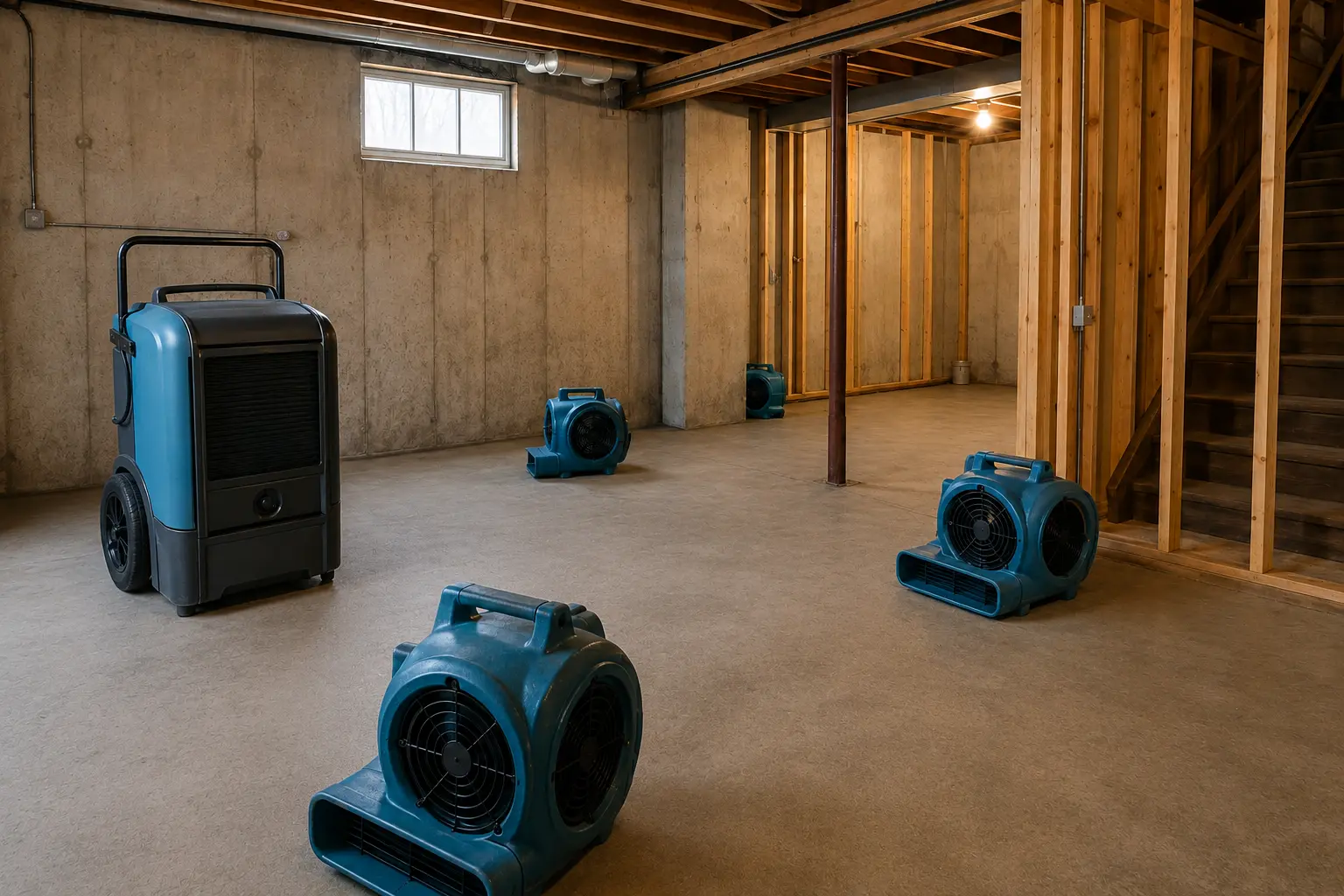
| Finishes | Finished walls, flooring and built-ins | Unfinished concrete and open framing |
| Contents | Stored belongings to sort | Little stored |
| Access and utilities | Difficult access, systems in the basement | Open, easy access |
Clear answers
Common questions
Can flooded-basement cleanup be priced by square foot?
Square footage can be one quantity, but water type, depth, materials, contents, access and repairs prevent one rate from accurately describing every basement.
Is basement pumping the same as restoration?
No. Pumping removes standing water; restoration can also include contaminated-material removal, cleaning, structural drying, contents and reconstruction.
Does a finished basement cost more to restore?
Substantially. Carpet, padding, drywall, trim, built-ins and contents all become removal and rebuild items, where an unfinished slab is mostly extraction and drying.
What if the furnace or water heater was underwater?
Submerged mechanical and electrical equipment is assessed by the relevant trade and frequently replaced instead of restarted. Do not switch anything back on before it is checked.
Does homeowners insurance cover a flooded basement?
It depends entirely on where the water came from. A sudden internal failure is treated very differently from groundwater or a river. Your insurer decides.
Authoritative references