The short answer
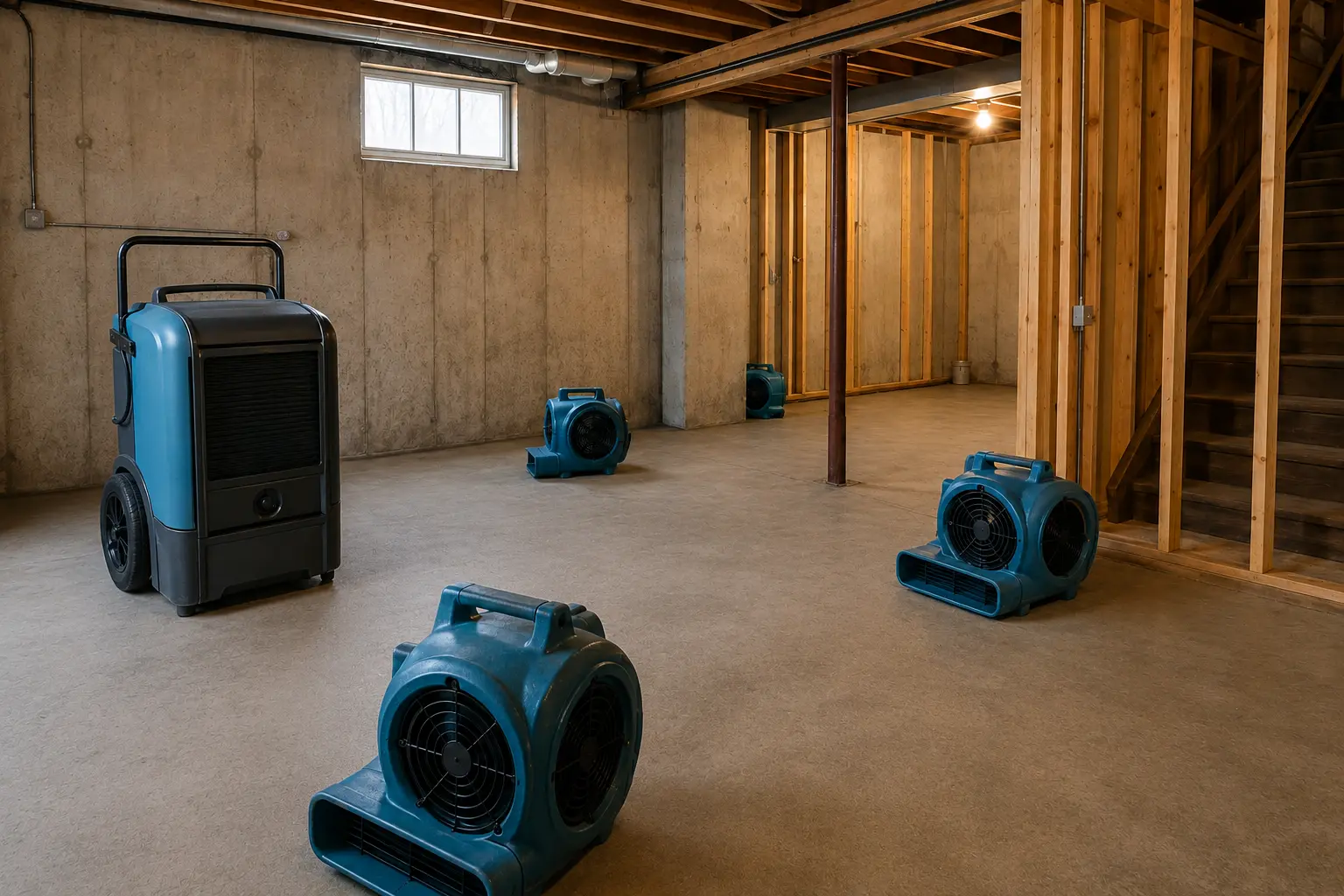
Day one is inspection, extraction and equipment placement, usually all in the same visit if the crew arrives promptly. Days two through four are daily monitoring visits with readings, adjustments and any additional removal that the readings turn up along the way. Days four through seven bring materials to the drying goal and equipment comes out. Reconstruction begins only after that, once every reading confirms the assembly is actually dry, not just dry-feeling.
Day one sets everything else up
The first visit should produce a moisture map of the affected area, not just equipment on the floor. Without baseline readings there is nothing to measure progress against, and the equipment days that follow have no evidence behind them.
Extraction, removal of clearly unsalvageable material and equipment placement all happen the same day where possible.
The monitoring visits are the work
Days two onward look uneventful from the outside: someone arrives, takes readings, moves a machine, leaves. That is the technical core of the project and it is what supports the invoice.
A project where nobody visits between setup and pickup is not being monitored, and the equipment days on the invoice have nothing behind them.
Start the restoration request
Need restoration service for this property?
Send the address, callback number and a short description of the damage. You do not need to diagnose the problem before requesting help.
When more comes out mid-week
Additional removal on day two or three is common and is not a sign of a bad initial assessment. Readings reveal where drying is not progressing, and that is often a material that has to come out.
It should be explained and documented when it happens instead of appearing later on an invoice.
What you should receive at the end
The record is part of the deliverable, not a favour, and it is what the insurance conversation runs on.
- Baseline and daily moisture readings
- The affected-area map or sketch
- Photographs before and during
- A list of materials removed and disposed of
- Final readings against a dry reference
- The equipment log showing what ran and when
Living in the property during the week
Equipment is loud and warm and runs continuously, and turning it off overnight extends the project. Containment may make rooms unusable.
Agree early which rooms stay in use, and expect the noise to be the hardest part.
Signals that something has stalled
Readings that are not moving over several days, no visits between setup and pickup, or equipment removed without final readings are all worth a direct question.
So is a mitigation phase that finishes with no reconstruction estimate in progress.
Winter drying in Vermont takes longer
Cold weather reduces how much moisture outside air can carry away, so winter drying in Greater Burlington frequently runs longer than the same loss in September, and dehumidification does more of the work.
In older Burlington-area buildings with plaster and multiple floor layers, expect the mid-week investigation step to matter more, because the assemblies conceal more than modern construction does.
Week one at a glance
A typical first week of a water restoration follows a pattern of inspection and extraction on the first day, daily monitoring visits in the middle and equipment removal with final readings at the end, and stalls tend to show up as departures from that pattern, so the table gives the days, what happens and what you should see.
| Days | What happens | What you should see |
|---|---|---|
| Day 1 | Inspection, extraction, equipment placement | Scope and initial readings |
| Days 2 to 4 | Monitoring visits and adjustments | Daily readings and any added removal |
| Days 4 to 7 | Drying reaches goal and equipment comes out | Final readings and pickup |
| End of week | Completion documentation | Records supporting the next phase |
Step by step
The first week of a water restoration project
What a property owner should expect to see happening on each day of a typical contained residential water loss.
Day one: inspect and extract
The affected area is mapped with moisture meters, standing water is extracted, obviously unsalvageable material is removed and drying equipment is placed. Baseline readings are recorded.Day two: first monitoring visit
Readings are taken again and compared to the baseline. Equipment is repositioned or added. Anything the first visit could not reach is opened and assessed.Day three: adjust and open
Materials that are not responding are investigated. This is commonly when additional removal happens, because the readings have shown where drying is not progressing.Days four to six: convergence
Readings should be trending toward the goal. Equipment may start coming out of areas that have reached it while others continue.Final day: verify and remove
Materials meet the documented drying goal against a dry reference. Final readings are recorded, equipment is removed and the mitigation phase closes.Handoff
The drying record and photographs are provided, and the reconstruction scope takes over. Ask for that estimate to have been prepared during the week, not started now.
Clear answers
Common questions
How many times should someone visit during drying?
Normally daily. The monitoring visits are where readings are taken and equipment adjusted, and they are what supports the equipment days on the invoice.
Can I turn the equipment off at night?
It extends the project. The equipment is sized to run continuously, and interrupting it means more days instead of fewer.
What should I be doing during week one?
Keeping your own record, photographs, the scope, the readings, who said what and when, and making the decisions the project is waiting on. Decision delay is what stretches week one into week three.
Is it normal for the scope to change during the first week?
Yes. Opening up an assembly reveals what an inspection could only estimate, and the scope should be updated in writing when it does rather than verbally.
Authoritative references