The short answer
A water-heater repair stops the plumbing source; restoration removes standing water, checks adjacent rooms and lower levels, dries walls and floors, and documents the property before repairs close the assembly.
Identify the failure and the water path
Water can move under floating floors, into wall bases and through utility penetrations before the visible puddle is removed.
A plumber replaces or repairs the heater and confirms the supply is controlled. The restoration scope should separately identify extraction, material access, drying and repair needs.
Inspect finishes around the utility area
Drywall, insulation, cabinets, flooring, subfloor and nearby stored contents may all need moisture readings. Finished closets and mechanical rooms can restrict airflow, while an unfinished concrete floor may still direct water into adjacent finished rooms.
The inspection boundary follows measured conditions instead of the edge of the visible water. Water that reached a lower level also requires ceiling and wall checks below.
Start the restoration request
Need restoration service for this property?
Send the address, callback number and a short description of the damage. You do not need to diagnose the problem before requesting help.
Dry before replacing the equipment and finishes
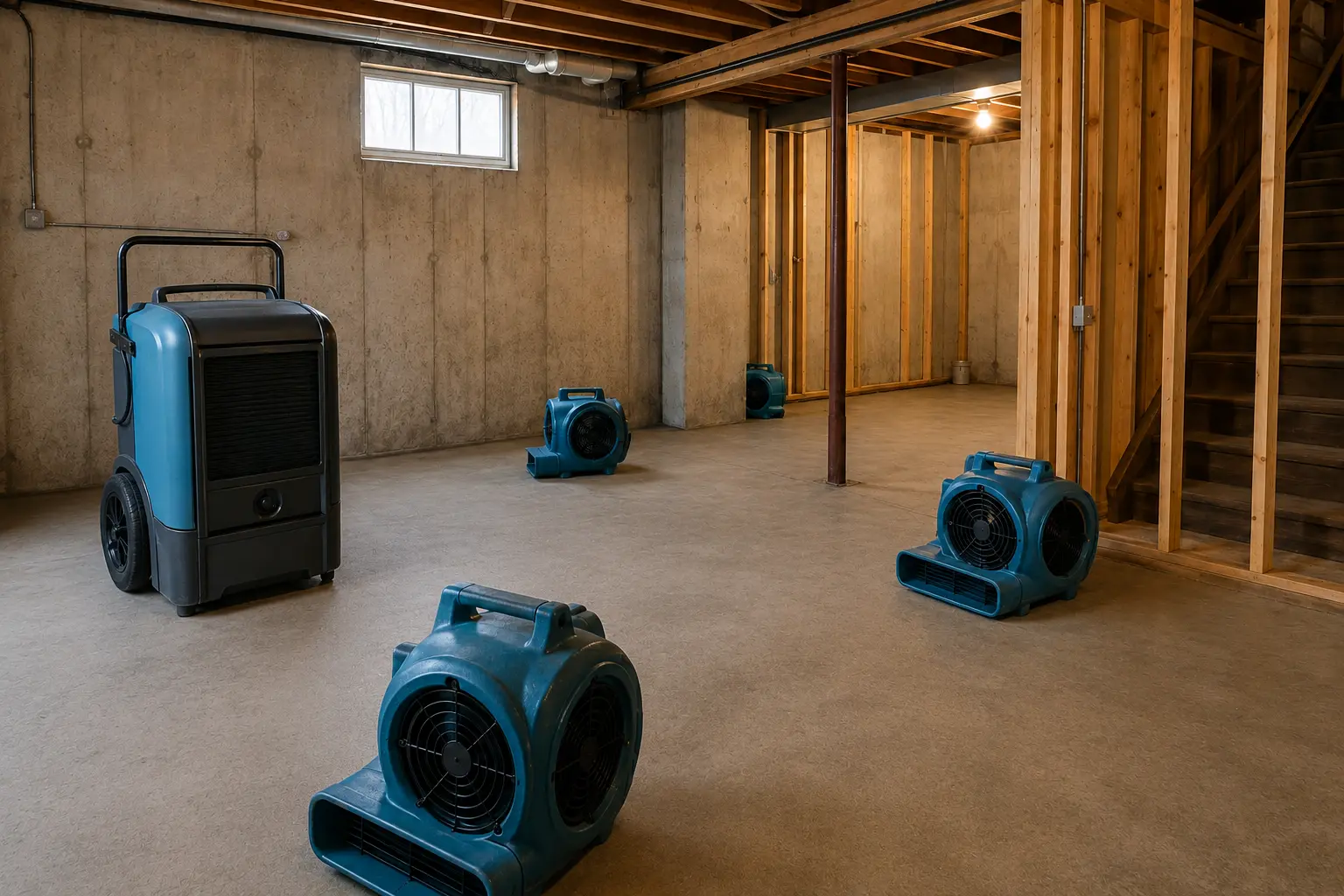
Equipment placement must leave safe service access and account for heat, ventilation and electrical conditions. Materials that remain can be dried and monitored while damaged finishes are documented for later replacement.
Before walls or flooring are closed, retain the source-repair record and drying completion measurements. The new heater installation does not by itself show that the surrounding assembly is dry.
Details that improve the first restoration call
Report the service address, heater location, whether water is still entering, affected rooms and floors, standing-water depth and utility status. Mention finished flooring, cabinets, a ceiling below and any long period before discovery.
Do not dispose of the failed component or wet finishes before basic documentation when they can remain without causing additional damage. Source photographs and the plumber's invoice help explain what happened.
Commonly missed water-heater damage
Water can collect beneath the pan, at wall bottom plates, under adjacent flooring and inside a platform or closet base. In upper-level installations, penetrations can direct water into a ceiling cavity below.
The restoration plan should state where readings were taken and how the team will verify concealed areas. A dry concrete surface is not enough when attached wood or gypsum remains wet.
Prevent recurrence without mixing scopes
A plumber can address the replacement unit, shutoff, pan, drain, valves and code-related installation details. Sensors or automatic shutoffs may reduce discovery time depending on the property.
Keep prevention upgrades separate from the current loss estimate. That makes restoration cost, source repair and elective improvements easier to understand.
Water-heater losses in Greater Burlington buildings
A tank in a Burlington basement, South Burlington utility closet or upper-level multifamily unit can create very different water paths. Include the property type, heater level and whether water reached finished rooms or a ceiling below.
Cold-weather access and heat status also matter when the failed unit supplies domestic hot water or connects to broader mechanical work. The plumber's source scope and the restoration drying scope should stay distinct.
Water heater leak: source and damage
A water heater repair and a water damage job are different work. The table shows what each part of the loss involves.
| Task | Who | Notes |
|---|---|---|
| Stop and repair the leak | Plumber | Record whether it came from the tank, valve, relief line or connection |
| Extract standing water | Restoration company | Check adjacent rooms and lower levels |
| Dry walls and floors around the utility area | Restoration company | Utility rooms often hide water under finishes |
| Replace the heater | Plumber | After the area is dry or as coordinated |
| Rebuild finishes | Reconstruction contractor | Only after readings confirm dry |
Clear answers
Common questions
Does a plumber clean up water from a failed water heater?
A plumber handles the heater and plumbing source. A restoration company handles extraction, moisture inspection, structural drying and damaged materials unless the plumber explicitly offers that separate work.
Can water from a water heater damage the room below?
Yes. Water can move through floor penetrations, seams and framing into ceilings and walls below even when the upper floor looks mostly dry.
Should flooring be replaced after a water-heater leak?
Not automatically. Water type, flooring product, subfloor moisture, deterioration and measured drying progress determine whether restoration is practical.
How do I shut off a leaking water heater?
Close the cold-water supply valve at the top of the unit, and turn off the power at the breaker or the gas at the valve. If you cannot reach the supply valve safely, close the house main.
How long do water heaters usually last?
They have a finite service life and failures cluster in later years, so age is the strongest predictor. A unit past its expected life sitting above finished space is worth planning around instead of waiting on.
Authoritative references