The short answer
Ozone is a strong oxidiser used in unoccupied spaces only, because it is hazardous to breathe and damages some materials. Hydroxyl generation is slower and can generally run in occupied spaces. Thermal fogging uses heat to carry a deodorising agent into the same spaces smoke penetrated. All three are finishing steps after residue removal, not substitutes for it.
Why source removal comes first
Odour is molecules being released by material. Any treatment addresses what is currently airborne and on exposed surfaces; it does not reach into insulation, into a wall cavity or into the inside of a sofa cushion.
So a building treated before cleaning smells better for a while, and then the material that was never dealt with keeps releasing. That is the single most common reason people are told a treatment 'did not work'.
Ozone
Ozone is a strong oxidiser that reacts with odour molecules. It is effective, and it is hazardous to breathe, so it is used only in unoccupied spaces with a clearance period afterwards before people, pets or plants return.
It also attacks some materials. Rubber, certain plastics, elastic and some finishes degrade with exposure, which is a real consideration when the contents are still in the building.
Start the restoration request
Need restoration service for this property?
Send the address, callback number and a short description of the damage. You do not need to diagnose the problem before requesting help.
Hydroxyl generation
Hydroxyl generators produce reactive species using ultraviolet light instead of concentrating an oxidising gas. The process is gentler and slower, and it can generally run with occupants present, which is why it is often chosen for a building people cannot leave.
Slower is the trade-off. A hydroxyl process typically runs for considerably longer than an ozone treatment to achieve a comparable result.
The three treatments compared
All three are finishing steps. The choice is about occupancy, materials and time.
| Method | How it works | Occupancy | Main constraint |
|---|---|---|---|
| Ozone | Oxidises odour molecules with concentrated ozone gas | Unoccupied only, with a clearance period | Hazardous to breathe; degrades rubber and some plastics |
| Hydroxyl | Generates reactive species using ultraviolet light | Generally usable with occupants present | Considerably slower to reach the same result |
| Thermal fogging | Heat carries a deodorising agent along the smoke's path | Unoccupied during application | Only useful after residue removal; does not clean |
Thermal fogging
Thermal fogging heats a deodorising agent into a fine fog that behaves the way smoke behaved, so it penetrates the same cracks, cavities and porous surfaces the smoke reached. That is its whole rationale: it goes where the smoke went.
It is applied in an unoccupied space and it is a deodorising step, not a cleaning one. Fogging a building that still holds residue is a temporary mask.
Sealing: the step that is not a treatment
Where residue has penetrated a porous substrate and cleaning cannot fully remove it, the durable answer is frequently a sealer before the finish goes back. That physically stops the substrate re-emitting instead of reacting with what it emits.
It is the reason the correct order on a smoke-damaged wall is clean, then seal, then paint. Painting over unsealed residue lets both the staining and the odour come back through the new finish.
If the smell comes back
Returning odour is information, not a failure of the treatment. It means source material remains somewhere the cleaning did not reach: commonly HVAC, insulation, the underside of a subfloor, behind trim, or within soft contents.
The right response is to go looking rather than to repeat the treatment. A second application on the same untouched source produces the same temporary result.
Odour sources common in this region
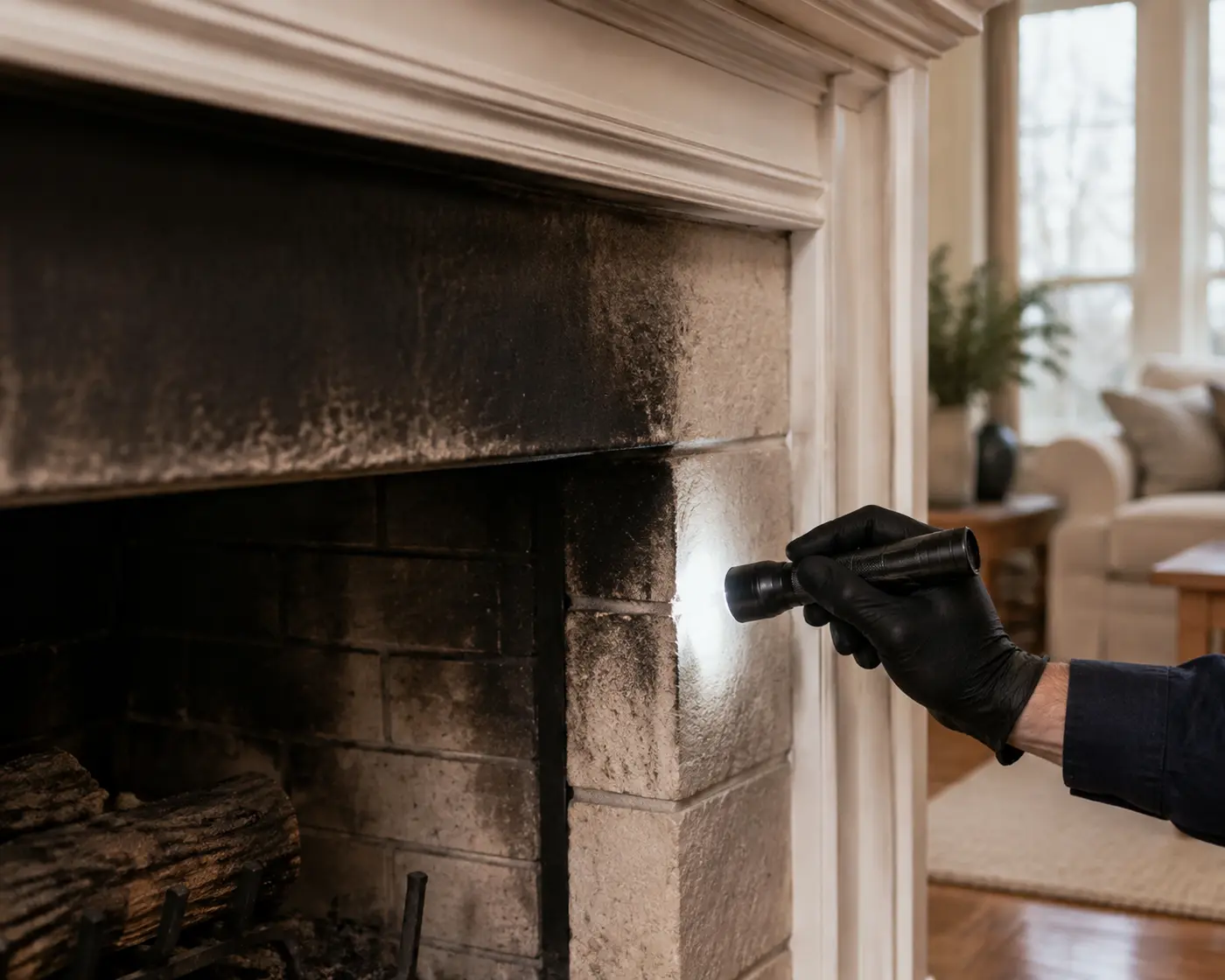
Wood heat is widespread across Greater Burlington and the surrounding towns, and it produces its own odour work: a stove that backdrafts into a room, a chimney fire, and the general accumulation in a building heated with wood for decades.
Oil-fired heating adds furnace puffbacks, where unburned fuel ignites and forces oily soot through the entire distribution system. That residue reaches every room the ductwork serves, which is why puffback odour work almost always includes the HVAC system.
The third local source is not fire at all. Damp basement and crawl-space odour from July and August humidity, and the musty smell that follows an incompletely dried spring melt, are the two most common odour enquiries in this region, and no fire-odour treatment addresses either, because the source is moisture in a material.
Clear answers
Common questions
Will ozone get rid of the smoke smell?
It will oxidise what is airborne and on exposed surfaces. If residue remains in insulation, HVAC, soft contents or a wall cavity, the smell returns as that material keeps releasing. Source removal comes first.
What is the difference between ozone and hydroxyl?
Ozone is a concentrated oxidising gas: fast, effective, and requiring an empty building. Hydroxyl generation is gentler and can generally run with occupants present, but takes considerably longer.
Authoritative references