The short answer
Cooking-fire residue is greasy and adheres strongly, so it is cleaned with methods matched to that rather than general soot cleaning. It travels well beyond the kitchen, bonds to surfaces as it cools, and holds odour in porous materials, which is why a brief fire routinely produces cleaning across several rooms.
Why cooking residue is its own category
What burns determines how residue behaves. Cooking oils and fats produce a residue that is greasy, adheres strongly to surfaces as it cools, and carries a strong persistent odour.
That combination resists dry cleaning methods that work on drier residues from paper or wood, which is why matching method to residue type is the first decision instead of a detail.
It travels further than the fire did
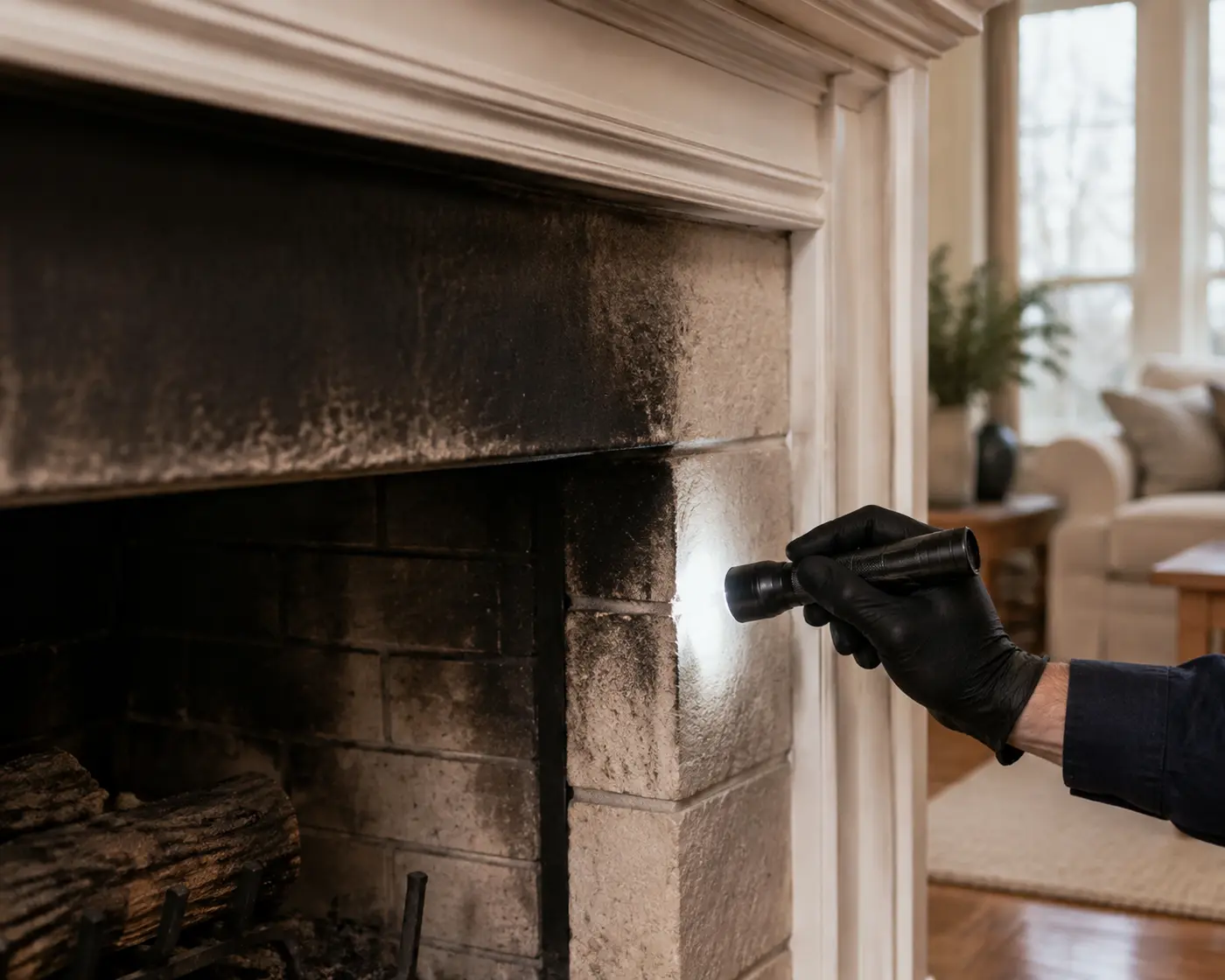
Heat carries residue upward and outward, and it deposits on cooler surfaces away from the source: ceilings, the tops of door casings, adjacent rooms, and up stairwells to a floor above.
A fire contained to a pan can leave a cleaning scope covering a kitchen, a hallway and rooms beyond. The extent is established by inspection, not by where the flames were.
Start the restoration request
Need restoration service for this property?
Send the address, callback number and a short description of the damage. You do not need to diagnose the problem before requesting help.
Cabinets and contents are the work
Kitchen cabinets have interiors, contents, and surfaces on their tops and undersides that residue reaches and that ordinary cleaning misses. Food and packaging in the affected area is generally discarded.
Where cabinet interiors are unfinished or the material is particleboard, residue absorbs and cleaning may not fully resolve odour, which moves the decision toward replacement.
What usually needs addressing
The scope reaches well past the visibly affected area, and the odour work is separate from the surface cleaning.
- Ceilings and the tops of trim throughout the path
- Textiles: curtains, upholstery, rugs, clothing
- Any extraction hood, filter and duct run
The odour is not on the surface
Cleaning surfaces removes what you can see. The persistent odour lives in porous materials, textiles, unfinished wood, insulation, cabinet substrate, and in the building's air path.
That is why a kitchen that looks clean can still smell, particularly once the heating comes on and the building recirculates its own air.
The extraction system matters
Have it inspected instead of assumed clean. It is a small part of the scope that accounts for a disproportionate share of recurring odour complaints.
Kitchen fires in the region's apartments and mixed-use buildings
Across Burlington and Winooski, converted multi-unit buildings and mixed-use blocks put kitchens directly below, above and beside other occupied space, with shared stairwells and framing cavities carrying residue between them.
In those buildings a contained pan fire in one unit routinely produces an odour complaint from a neighbour, and the inspection boundary has to follow the building rather than the tenancy. Where the building predates 1978, any cleaning or removal disturbing painted surfaces also brings lead-safe requirements into scope.
Cooking-fire residue
Grease residue is cleaned differently from general soot.
| Surface | Issue | Approach |
|---|---|---|
| Cabinets | Grease bonds as it cools | Cleaning matched to grease |
| Walls and ceilings | Residue travels beyond the kitchen | Cleaning across affected rooms |
| Contents | Odor in porous items | Assess by material |
| Extraction system | Holds residue | Include in the scope |
Clear answers
Common questions
Can I clean grease residue with household products?
It resists methods that work on drier residues and can be set or smeared by the wrong cleaner. Cleaning matched to the residue type is the difference between removal and a permanent mark.
Why does it still smell after cleaning?
Because the odour is held in porous materials and the air path instead of on the cleaned surfaces. Textiles, cabinet substrate and any extraction duct are the usual holdouts.
Why does a small kitchen fire affect the whole house?
Protein and grease residue is fine, near-invisible and travels with the air, so it coats surfaces far from the kitchen while showing almost nothing. The odour is usually the first sign of its reach.
Can I clean grease residue with household cleaners?
It generally resists them and smears, and wiping spreads it. Identifying the residue type before cleaning is what determines the method.
Authoritative references