The short answer
Smoke reaches unburned property through shared framing cavities, ventilation systems, open doors and gaps around service penetrations. The damage is real, corrosive residue on surfaces and odour held in porous materials, and it is assessed and cleaned the same way as smoke in a burned building, minus the structural questions.
How smoke gets into an unburned building
In attached and multi-unit buildings the routes are structural: shared framing cavities, common stairwells, service penetrations for plumbing and wiring, and any shared ventilation. Smoke follows pressure differences and finds every gap.
In a detached building the routes are ventilation intakes, open windows and doors, and gaps in the envelope. An outdoor source can load a house heavily without anyone noticing until the residue is visible.
The damage is real even where nothing burned
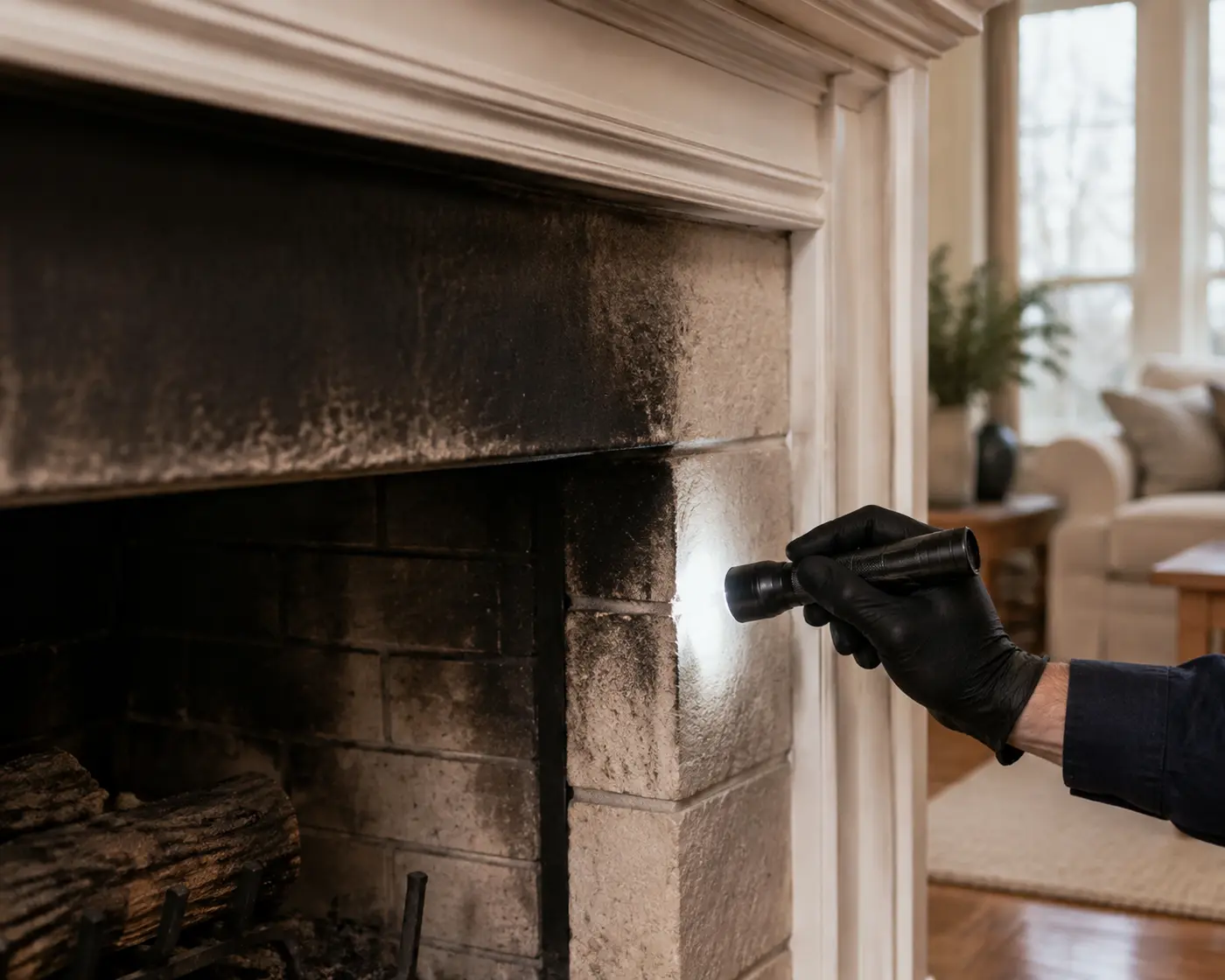
Residue is corrosive and continues to act on surfaces after deposition. Metals tarnish, some finishes etch, and porous materials, textiles, upholstery, insulation, paper, absorb odour that surface cleaning cannot reach.
The assessment is the same as in a burned building: identify residue type, map where it reached, decide what is cleaned and what is removed. What is absent is the structural and heat-damage question.
Start the restoration request
Need restoration service for this property?
Send the address, callback number and a short description of the damage. You do not need to diagnose the problem before requesting help.
Who pays, and why it takes longer
Where the fire was in another unit or another property, the claim frequently involves that party's insurer as well as your own. That is slower, and it is usually better to proceed through your own policy and let subrogation follow.
Waiting for another insurer to accept responsibility before starting cleaning lets corrosive residue act on surfaces for weeks, which enlarges everyone's exposure including theirs.
What to document
Because nothing burned here, the evidence of damage is less obvious and needs recording more carefully.
- Photographs of visible residue on surfaces, close up
- Which rooms are affected and which are not
- Odour observations, noted by room and date
- The source event and its incident reference if there is one
- Any HVAC that was running at the time
- Items with visible tarnishing or etching
The HVAC question is central here
If the system was running when smoke reached the building, it may have distributed residue to every space it serves. That converts a localised intrusion into a building-wide one.
Whether the system needs attention should follow an inspection rather than a default recommendation, and in a property heated by baseboard or mini-splits there is no duct network to distribute anything.
Do not wait to be told it is covered
Residue is time-sensitive. The reasonable position is to document thoroughly, notify your insurer, and get stabilisation and cleaning under way instead of pausing the property while liability is argued.
Emergency measures to prevent further damage are commonly reimbursable even while the wider claim is unresolved.
Attached and converted buildings in Burlington and Winooski
The region's older duplexes, converted multi-unit houses and mixed-use blocks share exactly the structural features that carry smoke between units: balloon-framed cavities running the height of the building, common stairwells and service chases threaded through original framing.
In those buildings a fire in one unit routinely produces residue in units that never saw flame, and sometimes in the commercial space below. The inspection boundary is set by the building instead of by the unit that burned.
How smoke reaches unburned areas
| Pathway | How it carries smoke | Check |
|---|---|---|
| Shared framing cavities | Open channels between units | Inspect walls and chases |
| Ventilation and HVAC | Distributes through ducts | Duct and equipment cleaning |
| Open doors | Direct entry | Nearby rooms |
| Service penetrations | Gaps around pipes and wires | Seal and clean |
Clear answers
Common questions
Can smoke damage a property that did not burn?
Yes. Residue is corrosive and odour permeates porous materials, and smoke travels through shared framing cavities, ventilation and gaps in the envelope.
Is smoke damage without fire covered by insurance?
It is commonly a covered peril, but it depends on the policy and the source. Report it and ask, and document the residue before anything is cleaned.
Authoritative references